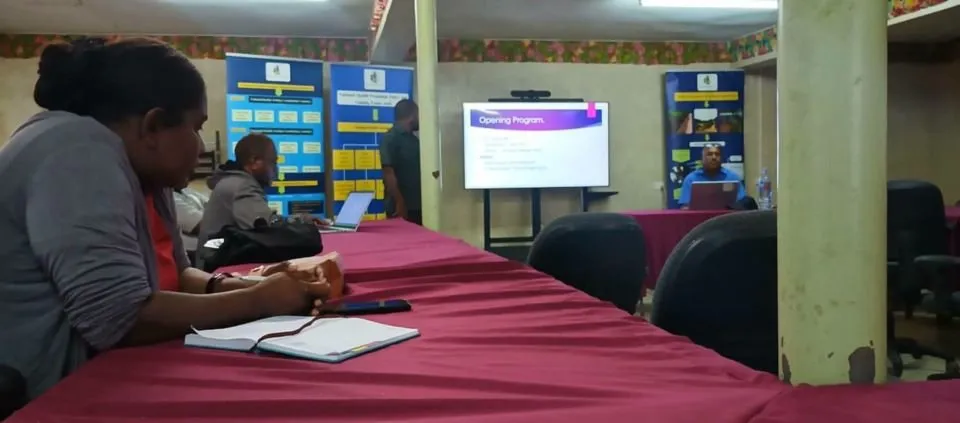
Guadalcanal Provincial Health Authority Sets Priorities for 2027
瓜达尔卡纳尔省卫生局为2027年设定优先事项
瓜达尔卡纳尔省卫生局为2027年设定优先事项
瓜达尔卡纳尔省卫生局为2027年设定优先事项
All collected updates from verified Solomon Islands sources.
瓜达尔卡纳尔省卫生局为2027年设定优先事项
瓜达尔卡纳尔省卫生局为2027年设定优先事项
BY BEN BILUA Gizo THE Western Provincial Government is expected to soon invite tenders for the sale of land parcels within the Gizo Town boundary. Information obtained by Island Sun indicates that land evaluation is currently underway to identify parcels that will be made available for sale through a tender process. A source familiar with the process said the land tender and sale will not only generate revenue for the Provincial Government but also provide a transparent process for allocating land and support economic development in Gizo. The source said a public tender notice will be issued outlining the conditions, requirements and procedures for interested applicants. “There are lots of unregistered land within Gizo Town that remain unproductive, and the ambition is to see something productive from these provincial assets,” the source said. The source said some land parcels were completely available, while others were partly occupied. “What we are trying to do is establish proper land registration, identify available land and put them into tender. “There will be conditions on who can apply and how to apply. All of these will be determined when the tender notice is published,” the source said. The proposed tender comes as Gizo continues to expand, with increasing demand for land and housing to accommodate both private-sector employees and public servants posted to the provincial capital. The shortage of accommodation has particularly affected the health sector, with some doctors and nurses reportedly delaying their deployment to Gizo because of a lack of suitable accommodation. In an interview with Island Sun earlier this year, Director of Western Province Health Services Dickson Boara said several doctors and nurses were expected to work at the hospital, but accommodation remained a major challenge. The proposed land tender will provide an opportunity for private investment in housing and other developments, while allowing the Provincial Government to generate revenue from its land assets. The exact number, location and conditions attached to the land parcels are expected to be made known once the tender notice is officially published.
作者:本·比卢亚(BEN BILUA) 吉佐 西部省政府预计将很快邀请招标,出售吉佐镇边界内的土地。 《岛屿太阳》获得的信息显示,土地评估目前正在进行,以确定将通过招标程序出售的土地。 一位熟悉该过程的消息人士表示,土地招标和销售不仅将为省政府创造收入,还将提供一个透明的土地分配过程,并支持吉佐的经济发展。 该消息人士表示,将发布一则公开招标通知,概述感兴趣申请者的条件、要求和程序。 “吉佐镇内有很多未注册的土地仍然闲置,目标是希望这些省级资产能够产生一些生产性成果,”该消息人士表示。 消息人士称,一些土地完全可用,而其他土地则部分被占用。 “我们正在努力建立适当的土地登记,识别可用土地并将其纳入招标。 “将会有关于谁可以申请和如何申请的条件。所有这些将在招标通知发布时确定,”该消息人士表示。 随着吉佐的持续扩张,对土地和住房的需求不断增加,以容纳私营部门员工和被派往省会的公务员,拟议的土地招标应运而生。 住宿短缺特别影响了卫生部门,有报道称一些医生和护士因缺乏合适的住宿而推迟前往吉佐。 在今年早些时候接受《岛屿太阳》采访时,西部省卫生服务局局长迪克森·博阿拉(Dickson Boara)表示,预计将有几名医生和护士在医院工作,但住宿仍然是一个重大挑战。 拟议的土地招标将为私人投资住房和其他开发提供机会,同时允许省政府从其土地资产中创造收入。 土地的确切数量、位置和附加条件预计将在招标通知正式发布后公布。
MHMS urges public to remain vigilant as illness spreads across provinces BY NED GAGAHE THE Ministry of Health and Medical Services (MHMS) is urging the public to remain vigilant and practise basic hygiene measures following a sharp and sustained increase in influenza-like illness (ILI) cases across the country. The increase was recorded through the national disease surveillance system over the reporting period from August 24 to September 13, 2026, the ministry said in a statement. MHMS said unusual increases were initially detected at surveillance sites in Honiara, Western and Malaita during the previous two reporting weeks. In the latest reporting week, surveillance sites in Central, Isabel and Makira also recorded increases in ILI cases. However, several surveillance sites in Honiara have reported a decline in the weekly number of cases. ILI is a syndrome that can be caused by several circulating respiratory viruses, including influenza and respiratory syncytial virus (RSV). The ministry said laboratory testing carried out in July and August detected influenza A in the majority of samples tested, while further testing is being conducted to determine which viruses are contributing to the current increase. Flu-like illnesses can spread easily from person to person, particularly when an infected person coughs or sneezes. Common symptoms include fever, dry cough, body aches, runny nose and sore throat. MHMS is advising people to wash their hands regularly with soap and water or use an alcohol-based hand sanitiser. People are also advised to cover their mouth and nose when coughing or sneezing, preferably with a tissue or into the elbow. Those with fever, cough or acute respiratory illness are encouraged to wear a surgical mask and avoid close contact with others. The ministry is also advising people experiencing flu-like symptoms to stay home and rest where possible, drink plenty of water and eat fruits and vegetables. For people experiencing fever, MHMS advises taking Panadol as directed by a nurse or doctor or using a sponge to help reduce the fever. People should seek medical attention if symptoms become severe or if there are concerns about their illness, particularly in young children, older people, pregnant women and people with underlying health conditions. The public is also encouraged to maintain clean environments by disinfecting frequently touched surfaces and improving indoor air circulation. MHMS said continued vigilance and good respiratory hygiene are important in helping reduce the spread of respiratory infections in communities.
卫生与医疗服务部(MHMS)呼吁公众保持警惕,采取基本卫生措施,因为流感样疾病(ILI)在全国范围内迅速传播。 根据卫生部的声明,在2026年8月24日至9月13日的报告期内,通过国家疾病监测系统记录到了病例的显著和持续增加。 MHMS表示,在前两周的监测中,霍尼亚拉、西部和马莱塔的监测点最初发现了异常增加。 在最新的报告周,中央、伊莎贝尔和马基拉的监测点也记录了ILI病例的增加。 然而,霍尼亚拉的几个监测点报告了每周病例数量的下降。 ILI是一种可以由多种流行的呼吸道病毒引起的综合症,包括流感和呼吸道合胞病毒(RSV)。 卫生部表示,在7月和8月进行的实验室检测中,检测到大多数样本中存在流感A病毒,同时正在进行进一步检测以确定哪些病毒导致了当前的增加。 流感样疾病可以通过感染者咳嗽或打喷嚏轻易传播给他人。 常见症状包括发热、干咳、身体疼痛、流鼻涕和喉咙痛。 MHMS建议人们定期用肥皂和水洗手,或使用含酒精的洗手液。 还建议人们在咳嗽或打喷嚏时用纸巾或肘部遮住口鼻。 有发热、咳嗽或急性呼吸道疾病的人被鼓励佩戴外科口罩,并避免与他人密切接触。 卫生部还建议出现流感样症状的人尽量待在家中休息,多喝水,吃水果和蔬菜。 对于发热的人,MHMS建议按照护士或医生的指示服用扑热息痛,或使用海绵帮助降温。 如果症状严重或对疾病有担忧,特别是在幼儿、老年人、孕妇和有基础健康问题的人群中,应寻求医疗帮助。 公众还被鼓励通过消毒经常接触的表面和改善室内空气流通来保持环境清洁。 MHMS表示,持续的警惕和良好的呼吸卫生对于帮助减少社区内呼吸道感染的传播至关重要。
Papua New Guinea's health challenges are too large for government to carry alone, Stephanie Copus Campbell and Sir Mahesh Patel wrote on the Devpolicy Blog, arguing for partnerships with safeguards rather than privatisation.
巴布亚新几内亚的健康挑战过于庞大,无法仅靠政府独自承担,斯蒂芬妮·科普斯·坎贝尔(Stephanie Copus Campbell)和马赫什·帕特尔爵士(Sir Mahesh Patel)在 Devpolicy 博客上写道,他们主张建立具有保障措施的合作伙伴关系,而非私有化。
The Ministry of Health and Medical Services said its surveillance system recorded a sustained rise in influenza-like illness cases between 24 August and 13 September 2026, with Honiara and five provinces affected.
卫生与医疗服务部表示,其监测系统记录了2026年8月24日至9月13日期间流感样疾病病例的持续上升,霍尼亚拉及五个省受到影响。
A statement posted on solomons.gov.sb said community, health and provincial leaders met in Tulagi from 14 to 18 September for the first Central Islands Provincial Health Summit.
一份发布在solomons.gov.sb上的声明称,社区、卫生和省级领导于9月14日至18日在图拉吉举行了首次中央岛屿省卫生峰会。
BY BEN BILUA Gizo GIZO is battling a surge in viral flu cases, with the town’s hospital reporting a sharp increase in patients seeking treatment over the past week. A nurse at Gizo Hospital said many residents had turned up with fever, headaches and severe joint pain, while some patients with underlying health conditions had been admitted for treatment. The nurse said a number of patients initially believed they had malaria, but their test results came back negative. “Some of the patients thought they caught malaria, but every result came back negative. This means that most of the patients are affected by the flu,” he said. The nurse said the increase in patients has placed additional pressure on the hospital as more residents seek medical attention for flu-like symptoms. He said Panadol has been provided to patients to help relieve joint pain and other symptoms. The nurse advised residents suffering from the flu to drink plenty of water and stay hydrated while recovering. People whose symptoms become severe or worsen have been advised to seek medical attention at Gizo Hospital.
作者:BEN BILUA 吉佐 吉佐正在应对病毒性流感病例激增,镇上的医院报告称过去一周寻求治疗的患者急剧增加。 吉佐医院的一名护士表示,许多居民出现发热、头痛和严重关节疼痛的症状,而一些有基础健康问题的患者已被收治。 这名护士表示,一些患者最初认为自己感染了疟疾,但检测结果均为阴性。 “有些患者以为自己得了疟疾,但所有结果都显示阴性。这意味着大多数患者受到流感的影响,”他说。 这名护士表示,患者的增加给医院带来了额外压力,因为更多居民寻求流感样症状的医疗帮助。 他说,医院已向患者提供了潘多尔(Panadol),以帮助缓解关节疼痛和其他症状。 护士建议患有流感的居民多喝水,保持水分,以便恢复。 症状严重或恶化的人被建议前往吉佐医院寻求医疗帮助。
Community, health and provincial leaders came together in Tulagi this week for the first Central Islands Provincial Health Summit to identify practical solutions for improving health services across Central Islands Province. The Summit, from 14 to 18 September, was organised by the Central Islands Provincial Health Service, with support from Australia, as part of the Ministry of Health and Medical Services (MHMS) national rollout of the Primary Health Care Performance Initiative (PHCPI) to strengthen primary health care services in the provinces. Community and health representatives discuss priorities during the Central Islands Provincial Health Summit in Tulagi. Participants take part in a planning activity during the Central Islands Provincial Health Summit, focused on strengthening local health services. Over five days, participants reviewed the strengths and challenges of health services across Central Islands Province and agreed on practical actions to improve access to care. Discussions focused on locally led priorities and solutions, recognising that strong health services depend on partnerships between communities, health workers and leaders. Minister for Health and Medical Services, Honourable Morris Toiraena, said provincial leadership is essential to improving health outcomes across Solomon Islands. “Achieving better health outcomes requires strong partnerships, effective leadership, and community participation,” said Hon. Toiraena. New water tanks provided from Australia to improve water access and support health services in Central Islands Province. “Through this Provincial Health Summit, we are strengthening accountability, promoting evidence-based decision-making, and supporting provinces to develop practical actions that will improve service delivery and health outcomes.” Central Islands Province Health Director, Mr James Poloso, said the summit helps community voices be reflected in future planning. “This summit is an important opportunity for Central Islands Province to listen to communities, understand the challenges facing our health workers, and agree on practical actions that will strengthen health services closer to where people live,” said Mr Poloso. Central Islands Province Health Director Mr James Poloso and Australian High Commission representative, Dr Tristan Armstrong, view water tanks provided to support local clinics. Central Islands Provincial Health Minister, the Honourable Edgar Tarai, delivers remarks during the first Central Islands Provincial Health Summit in Tulagi. Australian High Commissioner, Jeff Roach, said healthy communities depend on strong local services. “The greatest strength of Central Islands Province will always be its people – the health workers, community leaders, women and young people, provincial leaders, and families who support and sustain the health system every day,” High Commissioner Roach said. “When local leaders come together to identify challenges and create solutions, the results are more practical, sustainable and responsive to community needs.” During the summit, clinics across the province also received new water tanks, tools and other essential items funded by Australia. The practical upgrades respond to priorities identified by provincial health authorities and will help improve access to water, support frontline health workers, and strengthen services for communities across Central Islands Province. The Summit and support provided to the clinics form part of ongoing efforts by the Ministry of Health and Medical Services and Australia to strengthen locally led planning and improve health services across Solomon Islands.
本周,社区、健康和省领导者齐聚图拉吉,参加首届中央岛省健康峰会,旨在确定改善中央岛省健康服务的切实解决方案。 此次峰会于9月14日至18日举行,由中央岛省卫生服务机构组织,澳大利亚提供支持,作为卫生与医疗服务部(MHMS)国家推广初级卫生保健绩效倡议(PHCPI)的一部分,旨在加强各省的初级卫生保健服务。 社区和健康代表在中央岛省健康峰会期间讨论优先事项。 与会者在中央岛省健康峰会期间参与了一项规划活动,重点是加强当地健康服务。 在五天的时间里,与会者回顾了中央岛省健康服务的优势和挑战,并就改善医疗服务的可及性达成了切实行动的共识。讨论集中在地方主导的优先事项和解决方案上,认识到强大的健康服务依赖于社区、卫生工作者和领导者之间的合作关系。 卫生与医疗服务部长莫里斯·托伊雷纳(Honourable Morris Toiraena)表示,省级领导对于改善所罗门群岛的健康结果至关重要。 “实现更好的健康结果需要强有力的合作伙伴关系、有效的领导和社区参与,”托伊雷纳部长说。 来自澳大利亚的新水箱旨在改善水源获取并支持中央岛省的健康服务。 “通过此次省级健康峰会,我们正在加强问责制,促进基于证据的决策,并支持各省制定切实可行的行动,以改善服务交付和健康结果。” 中央岛省卫生主任詹姆斯·波洛索(Mr James Poloso)表示,峰会有助于社区声音在未来规划中得到反映。 “此次峰会是中央岛省倾听社区、了解卫生工作者面临挑战的重要机会,并就加强更靠近人们生活的健康服务达成切实行动的共识,”波洛索先生说。 中央岛省卫生主任詹姆斯·波洛索(Mr James Poloso)与澳大利亚高级专员代表特里斯坦·阿姆斯特朗(Dr Tristan Armstrong)查看为支持当地诊所提供的水箱。 中央岛省卫生部长埃德加·塔赖(Honourable Edgar Tarai)在首届中央岛省健康峰会期间发表讲话。 澳大利亚高级专员杰夫·罗奇(Jeff Roach)表示,健康的社区依赖于强大的地方服务。 “中央岛省最大的力量永远是它的人民——卫生工作者、社区领导者、女性和年轻人、省级领导者以及每天支持和维持卫生系统的家庭,”罗奇高级专员说。 “当地方领导者齐聚一堂,识别挑战并创造解决方案时,结果更具实用性、可持续性,并能更好地响应社区需求。” 在峰会期间,省内的诊所还获得了由澳大利亚资助的新水箱、工具和其他必需品。这些切实的升级响应了省卫生当局识别的优先事项,将有助于改善水源获取,支持一线卫生工作者,并加强中央岛省社区的服务。 此次峰会及对诊所的支持是卫生与医疗服务部和澳大利亚持续努力的一部分,旨在加强地方主导的规划并改善所罗门群岛的健康服务。
BY RODRICK DESURI AUKI A health team from the Malaita Provincial Health Service conducted a one-day community health awareness program in the streets of Auki Town yesterday. The program is part of the Malaita Health Service’s five-year program, which aims to promote positive changes in habits, behaviours and attitudes and encourage communities to take action to keep Auki Town clean. During the awareness, Kemuel Iro reminded members of the public about practices that contribute to making Auki Town dirty, particularly poor waste management. He encouraged the public to adopt positive practices to help make the town cleaner and more attractive to residents and visitors. “I want to remind us all that please, try to stop and put an end to unacceptable behaviour and old-fashioned ways of littering, spitting betel nut and throwing waste everywhere in public areas that make our town dirty. “Even though it is hard, we must try to stop our unwanted habits, behaviours and attitudes that cannot help to make our town clean,” he said. A source within the awareness team, who requested anonymity, said the program will also be extended to rural communities. “This program is just for us to try and change the ways in which we contribute to unnecessary littering and find ways that can help keep our town clean. “It is a five-year action plan aimed at cleaning our town. At the same time, we need to change our mindset and stop littering, which makes our town look bad,” he said. Photo credit: Rodrick Desuri For feedback, contact: rodrickdesuri50@gmail.com Editor: irwin3angiki@gmail.com
作者:RODRICK DESURI 奥基 来自马莱塔省卫生服务局的卫生团队昨日在奥基镇的街道上开展了一天的社区健康宣传活动。 该项目是马莱塔卫生服务局五年计划的一部分,旨在促进习惯、行为和态度的积极变化,并鼓励社区采取行动保持奥基镇的清洁。 在宣传活动中,Kemuel Iro 提醒公众注意那些导致奥基镇变脏的行为,特别是糟糕的废物管理。 他鼓励公众采取积极的做法,帮助使镇上更干净,更吸引居民和游客。 “我想提醒大家,请尽量停止并结束不可接受的行为和过时的乱扔垃圾、吐槟榔和在公共区域随意丢弃废物的习惯,这些行为让我们的镇变得肮脏。 “即使这很困难,我们也必须努力停止那些无法帮助我们保持镇上清洁的不良习惯、行为和态度,”他说。 一位要求匿名的宣传团队成员表示,该项目还将扩展到农村社区。 “这个项目只是为了让我们尝试改变我们对不必要乱扔垃圾的贡献方式,并寻找可以帮助保持我们镇上清洁的方法。 “这是一个旨在清洁我们镇的五年行动计划。同时,我们需要改变我们的思维方式,停止乱扔垃圾,这让我们的镇看起来很糟糕,”他说。 照片来源:Rodrick Desuri 反馈请联系:rodrickdesuri50@gmail.com 编辑:irwin3angiki@gmail.com
Honiara nurses strengthen NCD care through early screening, careful follow-up and quality improvement to protect patients. A woman visited Mataniko Area Health Center seeking to be checked for malaria. She had no idea she was also living with diabetes and hypertension. Because the clinic had strengthened its approach to quality improvement, her visit became more [...] The post Small Checks, Careful Follow-Up: How Frontline Nurses Are Making NCD Care Safer in Honiara appeared first on Tavuli News (Solomon Islands) .
霍尼亚拉的护士通过早期筛查、细致跟进和质量改进来加强非传染性疾病护理,以保护患者。一名女性前往马塔尼科地区卫生中心寻求疟疾检查。她并不知道自己还患有糖尿病和高血压。由于诊所加强了质量改进的措施,她的就诊变得更加 [...] 这篇文章《小检查,细致跟进:前线护士如何在霍尼亚拉提升非传染性疾病护理的安全性》最初发布在所罗门群岛的Tavuli News上。
By Lesley Foinagwa [Freelance journalist, Malaita province] A 15-member Primary Health Care (PHC) team from Atoifi Hospital has brought free health services closer to remote communities in Loiloi and surrounding areas through a four-day health outreach programme. The outreach was conducted from Monday, September 7, to Thursday, September 10, 2026, with the health team departing Loiloi on Friday, September 11. The team comprised a doctor, midwife, registered nurses and student nurses from Atoifi Hospital. The visit marked the first time a doctor, midwife and team of nurses had travelled to the highland communities to provide health services on such a scale. People from 12 communities and nearby settlements attended the programme, including Loiloi, Unufa, Sinafolo, Canaan, Rumu, Namolo’alo’a, ‘Aufarisi, Daisu’aani, Namoabu, Loulana, Maoa and Busule’easi. During the outreach, the health team provided free health checks, non-communicable disease (NCD) screening, health counselling, health awareness sessions and outpatient treatment. The programme also gave community members an opportunity to learn more about their health conditions and receive medical advice without having to travel long distances or pay costly fees for health checks. One of the recipients, Michael Mule from Lumu community, said he was satisfied with the approach taken by the visiting health team. “The type of service this health team provided is different compared to the previous. I am really satisfied with the way this health team thoroughly checked my health status before giving me a prescription that truly meets my health needs,” Mr Mule said. Health team members Women in the communities also benefited from health awareness sessions, particularly discussions on healthy food preparation and the importance of reducing excessive salt and other ingredients in daily meals. Veronica Maeanisia said the programme provided her with useful knowledge that she could apply at home. “As women, we are the main cooks in our houses, and most of the time we add too much salt to the food. Therefore, this programme helped me to use the right amount of ingredients that promote good health,” Mrs Maeanisia said. The outreach was particularly important for the remote communities, where residents face challenges travelling to Maoa Rural Health Centre to access medical services. Distance, difficult access routes and transportation costs can prevent people from receiving regular health checks and medical advice. The programme also placed strong emphasis on NCDs, which are an increasing health concern in communities. Community members welcomed the outreach because it combined medical services with health education, allowing them not only to receive treatment but also to better understand how lifestyle choices can affect their health. The successful completion of the outreach has raised hopes among the communities that similar programmes will be conducted in the future, helping bring essential health services closer to people living in remote and hard-to-reach areas. [END] The post Atoifi Health Team brings free medical services to remote Loiloi communities first appeared on Solomon Islands Broadcasting Corporation (SIBC) .
作者:莱斯利·福伊纳瓜 [马莱塔省自由撰稿人] 阿托伊菲医院的15名初级卫生保健(PHC)团队通过为期四天的健康外展项目,将免费健康服务带到了洛伊洛伊及周边地区的偏远社区。 该外展活动于2026年9月7日(星期一)至9月10日(星期四)进行,健康团队于9月11日(星期五)离开洛伊洛伊。 团队成员包括来自阿托伊菲医院的医生、助产士、注册护士和实习护士。 此次访问标志着医生、助产士和护士团队首次前往高地社区,以如此规模提供健康服务。 来自12个社区和附近定居点的人们参加了该项目,包括洛伊洛伊、乌努法、希纳福洛、迦南、鲁穆、纳莫洛阿洛、奥法里西、戴苏阿尼、纳莫阿布、卢拉纳、毛阿和布苏雷阿西。 在外展期间,健康团队提供了免费的健康检查、非传染性疾病(NCD)筛查、健康咨询、健康意识讲座和门诊治疗。 该项目还为社区成员提供了了解自身健康状况和接受医疗建议的机会,无需长途旅行或支付昂贵的健康检查费用。 其中一位受益者,来自卢穆社区的迈克尔·穆勒表示,他对来访健康团队的做法感到满意。 穆勒先生说:“这支健康团队提供的服务与以往不同。我对这支健康团队在给我开处方之前,仔细检查我的健康状况的方式非常满意,这确实满足了我的健康需求。” 健康团队成员 社区中的女性也从健康意识讲座中受益,特别是关于健康食品准备和减少日常饮食中过量盐分及其他成分的重要性讨论。 维罗妮卡·梅阿尼西亚表示,该项目为她提供了可以在家中应用的有用知识。 梅阿尼西亚女士说:“作为女性,我们是家庭的主要厨师,大多数时候我们在食物中添加了过多的盐。因此,这个项目帮助我使用适量的成分来促进健康。” 对于偏远社区而言,此次外展尤为重要,因为居民在前往毛阿乡村卫生中心获取医疗服务时面临挑战。 距离、艰难的通行路线和交通费用可能会阻止人们定期接受健康检查和医疗建议。 该项目还特别强调了非传染性疾病(NCD),这是社区日益关注的健康问题。 社区成员欢迎此次外展,因为它将医疗服务与健康教育结合在一起,使他们不仅能够接受治疗,还能更好地理解生活方式选择如何影响他们的健康。 外展活动的成功完成让社区对未来类似项目的开展充满希望,帮助将基本健康服务带到生活在偏远和难以到达地区的人们身边。 [完] 该文章首次出现在所罗门群岛广播公司(SIBC)上。
BY DOUGLAS VAHIA The National Referral Hospital (NRH) Laboratory has issued an urgent appeal for the return of a vital microscope stolen from its Microbiology section, warning that the theft is affecting the hospital’s ability to provide essential diagnostic services to patients. The incident occurred in the early hours of Friday, September 11 with the stolen microscope described as a key diagnostic tool used daily to identify illnesses and conduct medical testing for the community. The matter is yet to be reported to police, with NRH officials telling Island Sun they are giving one week for any positive feedback to their appeal for the microscope’s return. “We will report the matter to police after one week if the microscope still has not been returned,” the officials told Island Sun under request of anonymity. This officials say two other microscopes were also stolen some years past from the lab, with each theft leaving the NRH lab struggling to provide adequate service. The loss of the equipment is a serious concern because it directly affects the laboratory’s ability to diagnose patients who depend on the hospital’s free healthcare services. A concern has also risen that the stolen microscope could be offered for sale to private clinics or individual microscopists. Private medical practitioners and individuals approached to purchase the equipment are urged not to buy it and, if they have already acquired it, to return it to the Medical Laboratory. The laboratory is also asking anyone who may have information about the person responsible for selling the equipment to report the matter to authorities or the hospital. Public is also encouraged to share the appeal to help increase the chances of recovering the stolen equipment and restoring the laboratory’s normal diagnostic services. For feedback, contact: diivee56@gmail.com Editor: irwin3angiki@gmail.com
作者:道格拉斯·瓦希亚 国家转诊医院(NRH)实验室发出紧急呼吁,要求归还从其微生物学部门被盗的重要显微镜,并警告称,这一盗窃事件正在影响医院为患者提供基本诊断服务的能力。 事件发生在9月11日星期五的清晨,被盗的显微镜被描述为一种关键的诊断工具,每天用于识别疾病和进行医疗检测。 此事尚未向警方报告,NRH官员告诉《岛屿太阳》,他们给予一周的时间以期待对显微镜归还的积极反馈。 “如果显微镜在一周内仍未归还,我们将向警方报告此事,”官员在要求匿名的情况下告诉《岛屿太阳》。 这些官员表示,实验室在几年前也曾有两台显微镜被盗,每次盗窃都使NRH实验室难以提供足够的服务。 设备的丢失是一个严重的问题,因为它直接影响到实验室为依赖医院免费医疗服务的患者进行诊断的能力。 人们还担心被盗的显微镜可能会被出售给私人诊所或个人显微镜使用者。 被接触以购买该设备的私人医疗从业者和个人被敦促不要购买,如果他们已经获得该设备,则应将其归还给医学实验室。 实验室还呼吁任何可能知道负责出售该设备的人的信息,向当局或医院报告此事。 公众也被鼓励分享这一呼吁,以帮助增加找回被盗设备的机会,并恢复实验室的正常诊断服务。 反馈请联系:diivee56@gmail.com 编辑:irwin3angiki@gmail.com
The Ministry of Health and Medical Services (MHMS), through its routine disease surveillance system, continues to closely monitor the situation regarding flu-like illness across the country. Recent surveillance data for last reporting week of August 24-30 indicates an increase of cases with influenza-like illness (ILI) reported from surveillance sites in Honiara and Western province. Routine lab testing data has detected Influenza A in majority of samples tested in August. Influenza A is a highly contagious virus that causes the flu. It attacks your respiratory system, which includes your nose, throat, and lungs. Additional samples have been collected last week and are pending testing. The Ministry is continuing to monitor the situation through its routine surveillance and laboratory systems to better understand the circulation of respiratory viruses and to guide appropriate public health measures. Flu-like illnesses can spread easily from person to person, particularly when an infected person coughs or sneezes. Common symptoms may include fever, dry cough, body aches, runny nose, and sore throat. MHMS advises the public to: Practise good hand hygiene by washing hands regularly with soap and water or using an alcohol-based hand sanitiser. Cover the mouth and nose when coughing or sneezing, preferably with a tissue or into the elbow. Avoid close contact with others when feeling unwell. Stay home and rest when experiencing flu-like symptoms, where possible. Drink plenty of water and eat fruits and vegetables If fever, take Panadol as advise by a nurse or doctor or use sponge to reduce fever Seek medical attention if symptoms become severe or if there are concerns about illness, particularly for young children, older people, pregnant women, and people with underlying health conditions. Maintain a clean environment by disinfecting frequently touched surfaces and improving indoor air circulation. The MHMS encourages members of the public to remain vigilant and continue practising good respiratory hygiene to help reduce the spread of respiratory infections. The Ministry will continue to monitor the situation and provide further updates to the public as necessary. END// – MHMS PRESS RELEASE The post MHMS Monitors Increase of flu-like illness first appeared on Solomon Islands Broadcasting Corporation (SIBC) .
卫生与医疗服务部(MHMS)通过其常规疾病监测系统,继续密切关注全国范围内流感样疾病的情况。 最近的监测数据显示,在8月24日至30日的最后一周,霍尼亚拉和西部省的监测点报告了流感样疾病(ILI)病例的增加。常规实验室检测数据显示,8月份检测的大多数样本中发现了甲型流感病毒。甲型流感是一种高度传染性的病毒,会导致流感。它攻击呼吸系统,包括鼻子、喉咙和肺部。上周收集了额外的样本,正在等待检测结果。 卫生部继续通过其常规监测和实验室系统监测情况,以更好地了解呼吸道病毒的传播情况,并指导适当的公共卫生措施。 流感样疾病可以通过人与人之间轻易传播,特别是在感染者咳嗽或打喷嚏时。常见症状可能包括发热、干咳、身体疼痛、流鼻涕和喉咙痛。 MHMS建议公众: 定期用肥皂和水洗手,或使用含酒精的洗手液,保持良好的手部卫生。 咳嗽或打喷嚏时用纸巾或肘部遮住口鼻。 感到不适时避免与他人密切接触。 在出现流感样症状时尽可能待在家中休息。 多喝水,吃水果和蔬菜。 如果发热,请按照护士或医生的建议服用扑热息痛,或使用海绵降温。 如果症状严重或对疾病有担忧,尤其是对于幼儿、老年人、孕妇和有基础健康状况的人,请寻求医疗帮助。 通过消毒经常接触的表面和改善室内空气流通来保持环境清洁。 MHMS鼓励公众保持警惕,继续保持良好的呼吸道卫生,以帮助减少呼吸道感染的传播。 卫生部将继续监测情况,并在必要时向公众提供进一步的更新。 结束// – MHMS 新闻稿 该文章最初出现在所罗门群岛广播公司(SIBC)上。
Nine injured, 12-year-old boy in critical condition BY RODRICK DESURI AUKI NINE people were injured, including a 12-year-old boy who is in critical condition, after a Hilux overturned at Utae Hill along East Road on Friday morning. The black Hilux, which was operating as a passenger transport vehicle, was carrying more than 10 people who were travelling to the eastern side of Malaita to attend a funeral. Malaita Provincial Police Commander Superintendent Michael Ramosaea confirmed the accident on Saturday. He said the vehicle developed mechanical problems while attempting to climb Utae Hill. “According to information received from our Atori police officers, the incident occurred on Friday morning, September 11, between 10am and 11am,” Ramosaea said. He said the vehicle was about halfway up the hill when the mechanical fault occurred. “So, they did not manage to climb the hill, but reversed until the vehicle overturned,” he said. Ramosaea said nine people were rushed to Kilu’ufi Hospital following the accident, with several sustaining injuries. He confirmed that the 12-year-old boy is in critical condition. The driver was arrested and detained at Atori Police Station while police investigations continue. Ramosaea also appeals to vehicle operators and drivers to avoid overloading their vehicles and put the safety of passengers first. “That is why the crime prevention outreach launched is strongly emphasised. “For the safety of everyone, we should follow traffic rules and regulations to avoid such accidents in the future,” he said. For feedback, contact: rodrickdesuri50@gmail.com Editor: irwin3angiki@gmail.com
九人受伤,12岁男孩情况危急 作者:Rodrick Desuri 奥基 周五早晨,在东路的乌塔山(Utae Hill)上,一辆Hilux翻车,导致九人受伤,其中包括一名情况危急的12岁男孩。 这辆黑色Hilux作为客运车辆,载着超过10人前往马莱塔(Malaita)东侧参加葬礼。 马莱塔省警察指挥官迈克尔·拉莫萨埃(Michael Ramosaea)周六确认了这一事故。 他说,车辆在试图攀爬乌塔山时出现了机械故障。 “根据我们阿托里(Atori)警察的消息,这起事件发生在9月11日(周五)上午10点到11点之间,”拉莫萨埃说。 他说,车辆在上坡过程中大约到达了一半时发生了机械故障。 “所以,他们没能爬上山,而是倒退,直到车辆翻车,”他说。 拉莫萨埃表示,事故发生后,九人被紧急送往基卢乌菲医院(Kilu’ufi Hospital),其中几人受伤。 他确认那名12岁男孩情况危急。 司机已被逮捕并被拘留在阿托里警察局,警方正在继续调查。 拉莫萨埃还呼吁车辆运营商和司机避免超载,优先考虑乘客的安全。 “这就是为什么我们推出的犯罪预防外展活动被强调的重要原因。 “为了每个人的安全,我们应该遵守交通规则和法规,以避免未来发生类似事故,”他说。 如需反馈,请联系:rodrickdesuri50@gmail.com 编辑:irwin3angiki@gmail.com
BY BEN BILUA Gizo THE chairperson of Lambulambu Clinic in Western province is calling on the Government, non-government organisations (NGOs), donors and kind-hearted individuals to support the clinic’s efforts to improve health services for communities in its catchment area. Chairperson Billy Raso said the clinic urgently needs proper water and sanitation facilities, transportation and refurbishment of the existing clinic building. He said communities within the clinic’s catchment area are doing their best to support the facility, including efforts to complete staff accommodation for the nurse posted to the clinic. “Lambulambu Clinic provides health services to more than 2,500 people from Beiporo to Kimbiri. It covers a large distance. “What we need is a boat and engine, proper water supply and sanitation, as well as improving the current state of the clinic,” Raso said. He said a boat and engine will greatly improve the clinic’s ability to deliver health services to remote communities. Raso explained that the boat will allow the nurse to travel to communities within the clinic’s catchment area and also provide a means of transport for seriously ill patients to Gizo Hospital when necessary. He said the distance between some communities and the clinic is considerable, making access to health services particularly difficult during periods of bad weather. Raso said patients were sometimes forced to take significant risks while travelling by sea to seek medical attention. He said transporting sick patients from the clinic to Gizo Hospital is also a major challenge because the clinic does not have its own boat or engine. “There were situations where sick patients lost their lives and mothers gave birth while trying to reach Gizo Hospital,” Raso said. He said these challenges highlight the urgent need for reliable transportation to support emergency referrals and improve access to health care. Raso said Lambulambu Clinic had continued operating largely through the support of local communities. He said outside assistance is now needed to improve the standard and reliability of health services while community members had demonstrated strong commitment to keeping the clinic running. Raso said improving the clinic will not only benefit Lambulambu but also provide better health services to thousands of people living across its wide catchment area. For feedback, contact: maetuana777@gmail.com Editor: irwin3angiki@gmail.com
作者:本·比卢亚 基佐 西部省兰布兰布诊所的主席呼吁政府、非政府组织(NGOs)、捐助者和善心人士支持该诊所改善其服务区域社区的健康服务。 主席比利·拉索表示,诊所迫切需要适当的水和卫生设施、交通工具以及现有诊所建筑的翻新。 他说,诊所服务区域内的社区正在尽力支持该设施,包括努力为派驻诊所的护士完成员工住宿。 “兰布兰布诊所为从贝波罗到金比里的2500多人提供健康服务。覆盖的距离很大。 “我们需要的是一艘船和发动机、适当的水源和卫生设施,以及改善诊所的现状,”拉索说。 他说,船和发动机将大大提高诊所向偏远社区提供健康服务的能力。 拉索解释说,船将使护士能够前往诊所服务区域内的社区,并在必要时为重病患者提供前往基佐医院的交通工具。 他说,一些社区与诊所之间的距离相当大,使得在恶劣天气期间获得健康服务特别困难。 拉索表示,患者有时被迫冒着重大风险通过海路寻求医疗帮助。 他说,从诊所将病人转送到基佐医院也是一个重大挑战,因为诊所没有自己的船或发动机。 “曾经有病人因寻求基佐医院的帮助而失去生命,母亲在试图到达基佐医院时分娩,”拉索说。 他说,这些挑战突显了需要可靠交通工具以支持紧急转诊和改善医疗服务的迫切性。 拉索表示,兰布兰布诊所在很大程度上依靠当地社区的支持继续运营。 他说,现在需要外部援助来提高健康服务的标准和可靠性,而社区成员已表现出强烈的承诺来维持诊所的运作。 拉索表示,改善诊所不仅将使兰布兰布受益,还将为生活在其广泛服务区域内的数千人提供更好的健康服务。 反馈请联系:maetuana777@gmail.com 编辑:irwin3angiki@gmail.com
MHMS advances health cooperation with India, focusing on medicines, medical training, specialist referrals and pharmaceutical supply. A delegation from the Ministry of Health and Medical Services (MHMS) recently travelled to New Delhi, India, to advance discussions with the Government of India through its relevant ministries, line departments, selected hospitals and State-accredited pharmaceutical agencies, as both [...] The post MHMS Delegation Advances Solomon Islands–India Health Cooperation appeared first on Tavuli News (Solomon Islands) .
MHMS推进与印度的健康合作,重点关注药品、医疗培训、专家转诊和药品供应。最近,卫生与医疗服务部(MHMS)的一支代表团前往印度新德里,与印度政府及其相关部门、选定医院和国家认证的药品机构进行讨论,以推进双方的合作 [...] 该文章首次发布于Tavuli News(所罗门群岛)。
HIV cases recorded in Solomon Islands this year are already nearing last year’s total, with health authorities warning that the actual number of people living with the virus could be significantly higher. Director of the HIV, STI and Viral Hepatitis Program at the Ministry of Health, Dr Jackson Rakei, made the warning during a TB and HIV Talkback programme on SIBC this afternoon. Dr Rakei said 111 HIV cases have been recorded since the first case was identified in the country , with 29 people having died . A total of 34 new cases were recorded in 2025. He said some of those who died had other illnesses, while 72 people are currently receiving treatment . The majority of people diagnosed with HIV are males, he said. Dr Rakei said the current figures could represent only a small fraction of the actual number of people living with HIV in Solomon Islands. He said health authorities were increasingly seeing people with advanced HIV infections being admitted to hospital and subsequently dying. “The concern is that health authorities have seen people with advanced HIV infections being admitted to hospital and later dying,” Dr Rakei said. “This indicates that some people may have been living with HIV for a considerable period—possibly two years or more—without knowing their status. During that time, they may have unknowingly transmitted the virus to others.” Dr Rakei said many people remain unaware of their HIV status because they have never been tested. “A lot of people do not know their HIV status until they are tested. We believe there are people in Honiara and communities around the country who may be living with HIV without knowing they have the virus,” he said. He also expressed concern about the number of young people testing positive for HIV. “We are also seeing a number of young people testing positive for HIV, which indicates that the virus continues to circulate while many people remain unaware of their status,” Dr Rakei said. He said HIV testing coverage has also remained low in recent years. Health authorities are now working to increase HIV testing coverage and are encouraging more people to come forward and know their status. “We are appealing to the public to come forward for HIV testing and know their status. Early diagnosis allows people to begin treatment early and helps prevent serious complications and deaths associated with HIV,” Dr Rakei said. With three months remaining in 2026, health authorities are concerned that the number of new HIV cases could soon surpass the 34 cases recorded in 2025 . >>news@sbm2026
今年在所罗门群岛记录的HIV病例已接近去年的总数,卫生部门警告说,实际感染病毒的人数可能远高于此。 卫生部HIV、性传播感染和病毒性肝炎项目主任杰克逊·拉凯博士(Dr Jackson Rakei)在今天下午的SIBC结核病和HIV热线节目中发出了这一警告。 拉凯博士表示,自该国首次发现HIV病例以来,已记录111例HIV病例,其中29人已死亡。 2025年共记录34例新病例。 他说,其中一些死者有其他疾病,而目前有72人正在接受治疗。 他表示,确诊HIV的人大多数是男性。 拉凯博士表示,目前的数字可能仅代表所罗门群岛实际感染HIV人数的一小部分。 他说,卫生部门越来越多地看到晚期HIV感染者入院并随后死亡。 “令人担忧的是,卫生部门看到晚期HIV感染者入院并随后死亡,”拉凯博士说。 “这表明一些人可能已经感染HIV相当长时间——可能两年或更长时间——而不知道自己的状态。在此期间,他们可能无意中将病毒传播给他人。” 拉凯博士表示,许多人对自己的HIV状态仍然不知情,因为他们从未接受检测。 “很多人不知道自己的HIV状态,直到他们接受检测。我们相信,在霍尼亚拉和全国各地的社区中,有人可能感染HIV却不知道自己感染了病毒,”他说。 他还对年轻人检测出HIV阳性的数量表示担忧。 “我们也看到许多年轻人检测出HIV阳性,这表明病毒仍在传播,而许多人对自己的状态仍然不知情,”拉凯博士说。 他说,近年来HIV检测覆盖率也保持在较低水平。 卫生部门现在正在努力提高HIV检测覆盖率,并鼓励更多人主动了解自己的状态。 “我们呼吁公众主动进行HIV检测,了解自己的状态。早期诊断使人们能够尽早开始治疗,并有助于防止与HIV相关的严重并发症和死亡,”拉凯博士说。 在2026年剩下的三个月里,卫生部门担心新HIV病例的数量可能很快超过2025年记录的34例。 >>news@sbm2026
BY RODRICK DESURI Auki The Maoa Rural Health Clinic in West Kwaio, Malaita Province, is in urgent need of proper sanitation to serve its patients and nurses working at the clinic. Nurse in charge at the clinic, Jeffrey Fa’afunua said the current toilet facility is no longer suitable for use by patients given its poor condition making it unsafe and unhygienic. The toilet is in poor condition and very unhygienic, Photo credit- Jeffrey Fa’afunua He also warns that the building could collapse as sea levels continue to rise. “Looking ahead, the house could fall anytime as the sea level rises,” he said. The toilet facility is also at risk of falling anytime soon because of sea level rise, Photo credit- Jeffrey Fa’afunua. Fa’afunua mentioned that clinic staff should also have their own toilet facility. When asked if members of the community could support the construction of a new toilet, he said letters had been distributed seeking their support for the clinic’s development. He also appeals to the Malaita Provincial Health Authority for support to address the clinic’s sanitation needs. “On behalf of the clinic community members, I would like to further appeal to our health authorities to please support us with this sanitation issue. This is a very important facility that needs to be addressed so we can better serve our patients,” he said. Photo credit: Jeffrey Fa’afunua For feedback, contact: rodrickdesuri50@gmail.com Editor: irwin3angiki@gmail.com
作者:罗德里克·德苏里 奥基 毛阿乡村卫生诊所位于马莱塔省西夸伊奥,急需改善卫生设施,以服务于其患者和在诊所工作的护士。 诊所负责人杰弗里·法阿富努阿(Jeffrey Fa’afunua)表示,当前的厕所设施因其恶劣的状况已不再适合患者使用,变得不安全且不卫生。 厕所状况恶劣且非常不卫生,照片来源- 杰弗里·法阿富努阿 他还警告说,随着海平面不断上升,建筑物可能会倒塌。 “展望未来,房子可能会在海平面上升时随时倒塌,”他说。 厕所设施也面临随时倒塌的风险,照片来源- 杰弗里·法阿富努阿。 法阿富努阿提到,诊所工作人员也应该有自己的厕所设施。 当被问及社区成员是否可以支持新厕所的建设时,他表示已分发信件寻求他们对诊所发展的支持。 他还呼吁马莱塔省卫生局支持解决诊所的卫生需求。 “我代表诊所社区成员,进一步呼吁我们的卫生当局,请支持我们解决这一卫生问题。这是一个非常重要的设施,需要得到解决,以便我们能更好地服务我们的患者,”他说。 照片来源:杰弗里·法阿富努阿 如需反馈,请联系:rodrickdesuri50@gmail.com 编辑:irwin3angiki@gmail.com
BY BEN BILUA Buala COMMUNITIES within the Guguha Rural Health Clinic catchment area in Isabel province are stepping up efforts to fight the increasing number of malaria cases recorded in the area. A week-long community health campaign was conducted this week across Hovikoilo, Popoheo, Kolosori, Guguha School, Gnulahage and Kolomola. The campaign included health awareness programs, healthy setting training, community clean-up activities and the establishment of Community Health Committees. Malaria Division officer at Buala Hospital, John Manesonia, said the community engagement was organised in response to the increasing number of malaria cases being recorded within Guguha area. “Guguha RHC has recorded a very high number of malaria cases. We have been trying our best to deal with the communities, but this time it has been a success,” he said. Manesonia said the establishment of Community Health Committees will allow communities to continue carrying out health-related activities after the campaign. “We established Community Health Committees to carry on the duties,” he said. Principal Health Promotion Officer Mercy Walani acknowledged the communities for their active participation throughout the week-long program. She stressed that malaria is a potentially fatal disease and calls on communities to take greater responsibility to address factors contributing to its spread. Walani said maintaining clean and healthy communities is one of the important ways of reducing malaria transmission. “My advice is for communities to address the source of the issue. Engage in community clean-ups to destroy mosquito breeding sites. “It is highly recommended that we deal with the issue at the primary stage – which is to address the source of the issue,” she said. Walani said cooperation among communities is crucial to reduce malaria cases and improve overall health. She explained that the activities were carried out under the Healthy Setting concept, which promotes stronger partnerships between health providers, communities and other stakeholders. “Under the Healthy Setting concept, we establish the Community Health Committee to sustain the programs and activities at community level. “These committees have their work plans and activities to ensure people are healthy and free from diseases like malaria and other diseases,” Walani said. The establishment of the committees is expected to strengthen community participation in disease prevention and ensure health activities continue at village level beyond the week-long campaign. For feedback, contact: maetuana777@gmail.com Editor: irwin3angiki@gmail.com
作者:本·比卢亚 布阿拉 所罗门群岛伊莎贝尔省古古哈乡村卫生诊所覆盖区域的社区正在加大力度,抗击该地区日益增加的疟疾病例。 本周,在霍维科伊洛、波波赫欧、科洛索里、古古哈学校、古努拉哈吉和科洛莫拉开展了一项为期一周的社区健康宣传活动。 此次活动包括健康意识宣传、健康环境培训、社区清洁活动以及社区健康委员会的建立。 布阿拉医院疟疾部门官员约翰·马内索尼亚表示,社区参与是为了应对古古哈地区日益增加的疟疾病例。 “古古哈乡村卫生诊所记录了非常高的疟疾病例。我们一直在尽力与社区合作,但这次取得了成功,”他说。 马内索尼亚表示,建立社区健康委员会将使社区在活动结束后继续开展与健康相关的活动。 “我们建立了社区健康委员会来继续履行职责,”他说。 首席健康推广官梅西·瓦拉尼对社区在为期一周的活动中的积极参与表示感谢。 她强调,疟疾是一种潜在致命的疾病,呼吁社区对促进其传播的因素承担更大的责任。 瓦拉尼表示,保持社区清洁和健康是减少疟疾传播的重要方式之一。 “我的建议是,社区应解决问题的根源。参与社区清洁活动,消灭蚊子滋生地。 “我们强烈建议在初级阶段解决问题——也就是处理问题的根源,”她说。 瓦拉尼表示,社区之间的合作对于减少疟疾病例和改善整体健康至关重要。 她解释说,这些活动是在健康环境理念下进行的,该理念促进了卫生提供者、社区和其他利益相关者之间更强的合作关系。 “在健康环境理念下,我们建立社区健康委员会,以维持社区层面的项目和活动。 “这些委员会有自己的工作计划和活动,以确保人们健康,远离疟疾和其他疾病,”瓦拉尼说。 委员会的建立预计将加强社区在疾病预防中的参与,并确保健康活动在为期一周的活动后继续在村级开展。 如需反馈,请联系:maetuana777@gmail.com 编辑:irwin3angiki@gmail.com
BY TONY IROGA Yandina clinic is the premier health institution which serves more than 7,000 people in the Russell group of islands of the Central province. The clinic has its roots in the colonial era. The facility was initially operated under the Levers company before responsibility was transferred to the provincial authorities and later to the Ministry of Health and Medical Services (MHMS). The clinic despite its important service to the people of Russell islands, continues to face challenges. While administrative challenges remain a continued thorn in the side, climate change threatens its infrastructure and services at a growing rate. The sea now breaks just five metres from the clinic’s doorstep. Decades ago it was further away. Pepesala clinic is the other clinic serving the Russell islands. Patients needing higher level of care come to Yandina clinic before they are referred to the National Referral Hospital (NRH) in Honiara. Yandina clinic currently has three registered nurses, one nurse aide, two microscopy staff, one cleaner, one casual security officer, one boat skipper and one health environmental officer. Health volunteer workers also assist the clinic. Nurses working under pressure For Agnes Sade, the nurse in charge who has worked at Yandina Clinic for almost 14 years, the challenges are not new. But they are becoming increasingly difficult to ignore. Yandina clinic nurse in charge Agnes Sade. Photo credit – Tony Iroga With too few staff to properly cover shifts, working overtime is a norm. “When there is not enough staff to work, this can lead to some challenges in handling situations where the needs of the patients are sometimes not met,” Mrs Sade explained. Staff retention is also affected by the lack of proper accommodation and sanitation facilities. Health workers do not remain at the clinic for long because of the difficult living and working conditions. Currently, staff are accommodated in company houses associated with Levers Pacific because there are no dedicated staff houses built by the Ministry of Health and Medical Services. When medicines run out Medicine supply is another concern. The clinic receives supplies from the National Medical Store every two months. But supplies often run out before the next scheduled delivery. When this happens, the clinic requests supplementary supplies. The problem, however, is getting those medicines from Honiara to Yandina. Nurse’s consultation desk with medicines. Photo credit- Tony Iroga When boats cannot travel, drugs shortage can become more serious. When a patient’s condition is beyond the clinic’s capacity to manage, the patient must be referred to the National Referral Hospital in Honiara. Depending on the circumstances, patients may be transported by boat or helicopter. Water and sanitation an alarming concern One of the most basic challenges facing Yandina Clinic is access to water. The clinic has a water tank, but Sade said there is no reliable water supply to fill it. Water tank installed behind the clinic building, for drinking. Photo credit – Tony Iroga As a result, staff have to collect water from wells and the sea, carrying it by bucket for use at the clinic, including toilet facilities. Water container and cooler used for drinking water for patients. Photo credit- Tony Iroga Water is also needed for sick patients who require drinking water to take their medication. The situation highlights a difficult reality – a health facility caring for sick people does not have a reliable water supply. Waste storage and disposal problem The clinic does not have a proper place to store and dispose rubbish and medical waste. In the past, rubbish was dumped and burnt behind the clinic. But rising sea levels have now affected those areas, with seawater covering places that were previously used for waste disposal. The encroaching sea has created not only an infrastructure threat but also a sanitation problem. The sea is getting closer As the population grows and the demand for health services increases, Sade said the clinic needs more space. But expanding the existing site may not be a long-term solution. The coastline is now only about five metres from the clinic, raising concerns about the safety and sustainability of the current location. Waves break about 5 metres from clinic. Photo credit – Tony Iroga Community member Fisher Lulu believes the clinic should be relocated. The issue is particularly urgent because the clinic cannot simply stop operating. It remains the main referral point for communities across the Russell Islands. Maternity facilities among concerns One of the most important areas requiring attention is maternity care. Sade said the clinic does not have a clean and adequate delivery bed for mothers to give birth. Delivery bed in bad condition for mothers giving birth. Photo credit – Tony Iroga She called on the government to improve the facilities available for mothers, sick patients and health workers. Transportation challenges Nurse Sade also appealed for a more reliable system of transporting medicines from Honiara to Yandina. The clinic relies on boats to collect medical supplies, meaning bad weather and rough seas can disrupt the transportation of essential medicines. Relief through donor assistances Amid the challenges, relief has come in the form of assistance from non-government organisations along the years. Community members welcome an upcoming sanitation project funded by the United Nations Development Programme (UNDP) which is expected to begin at the end of September and run for one month. They said the project would help address some of the clinic’s long-standing sanitation problems. Community members also acknowledged the World Bank for funding a solar lighting system for the clinic last year. Nurse Sade expressed appreciation to the Ministry of Health and Medical Services and members of surrounding communities who have helped the clinic overcome difficulties in one way or the other. *Reporting for this story was supported by Pacific Media Assistance Scheme (PACMAS). Photo credit: Tony Iroga For feedback, contact: tonyiroga8@gmail.com Editor: irwin3angiki@gmail.com
作者:托尼·伊罗加 扬迪纳诊所是中央省拉塞尔群岛的主要医疗机构,服务超过7000人。 该诊所的历史可以追溯到殖民时代。最初由利华公司运营,后来责任转移到省政府,最终归属于卫生与医疗服务部(MHMS)。 尽管该诊所对拉塞尔群岛人民的重要服务,但仍面临诸多挑战。 行政管理问题依然是一个持续的难题,气候变化也以日益加剧的速度威胁着其基础设施和服务。现在,海水距离诊所门口仅有五米,几十年前则远得多。 佩佩萨拉诊所是另一个为拉塞尔群岛提供服务的诊所。需要更高级别护理的患者会先到扬迪纳诊所,然后再转诊到霍尼亚拉的国家转诊医院(NRH)。 扬迪纳诊所目前有三名注册护士、一名护士助理、两名显微镜工作人员、一名清洁工、一名临时保安、一名船长和一名健康环境官员。健康志愿者也为诊所提供帮助。 在压力下工作的护士 对于负责扬迪纳诊所的护士阿格尼丝·萨德来说,她在此工作近14年,面临的挑战并不陌生。但这些挑战正变得越来越难以忽视。 扬迪纳诊所护士长阿格尼丝·萨德。照片来源 – 托尼·伊罗加 由于工作人员不足以合理安排班次,加班已成为常态。 “当没有足够的工作人员时,这可能导致在处理患者需求时出现一些挑战,有时无法满足患者的需求,”萨德女士解释道。 由于缺乏适当的住宿和卫生设施,员工的留任也受到影响。 由于生活和工作条件艰苦,卫生工作者在诊所待的时间不长。 目前,员工住在与利华太平洋公司相关的公司房屋中,因为卫生与医疗服务部并没有建造专门的员工宿舍。 药品短缺 药品供应是另一个令人担忧的问题。 该诊所每两个月从国家医疗储备处获得药品供应。但在下次预定交货之前,药品往往会用完。 当这种情况发生时,诊所会请求补充药品。然而,问题在于如何将这些药物从霍尼亚拉运送到扬迪纳。 护士的咨询台与药品。照片来源 - 托尼·伊罗加 当船只无法航行时,药物短缺可能会变得更加严重。 当患者的病情超出诊所的处理能力时,患者必须转诊至霍尼亚拉的国家转诊医院。 根据情况,患者可能通过船只或直升机运输。 水和卫生问题令人担忧 扬迪纳诊所面临的最基本挑战之一是获取水源。 诊所有一个水箱,但萨德表示没有可靠的水源来填充它。 安装在诊所建筑后面的水箱,用于饮用。照片来源 - 托尼·伊罗加 因此,工作人员必须从井和海中取水,使用桶将水运送到诊所,包括厕所设施。 用于患者饮用水的水容器和冷却器。照片来源 - 托尼·伊罗加 生病的患者也需要水来服用药物。 这一情况突显了一个困难的现实——一个照顾病人的医疗设施没有可靠的水源。 废物储存和处理问题 诊所没有适当的地方来储存和处理垃圾和医疗废物。 过去,垃圾被倾倒并焚烧在诊所后面。但海平面上升现在影响了这些区域,海水覆盖了以前用于废物处理的地方。 逼近的海洋不仅造成了基础设施威胁,还带来了卫生问题。 海洋越来越近 随着人口增长和对医疗服务需求的增加,萨德表示诊所需要更多空间。 但扩展现有场地可能不是长期解决方案。 海岸线现在距离诊所仅约五米,这引发了对当前地点安全性和可持续性的担忧。 海浪在距离诊所约5米处破碎。照片来源 - 托尼·伊罗加 社区成员费舍尔·卢卢认为诊所应该搬迁。 这个问题尤其紧迫,因为诊所不能简单地停止运营。它仍然是拉塞尔群岛各社区的主要转诊点。 产科设施也是关注点之一 需要关注的最重要领域之一是产科护理。 萨德(Sade)表示,诊所没有干净和足够的产床供母亲分娩。 母亲分娩时的产床状况不佳。图片来源 – 托尼·伊罗加(Tony Iroga) 她呼吁政府改善为母亲、病人和医务工作者提供的设施。 运输挑战 护士萨德还呼吁建立一个更可靠的系统,将药品从霍尼亚拉运输到扬迪纳。 诊所依赖船只收集医疗用品,这意味着恶劣天气和波涛汹涌的海面可能会干扰必要药品的运输。 通过捐助者的援助获得救助 在这些挑战中,多年来来自非政府组织的援助为诊所带来了救助。 社区成员欢迎即将由联合国开发计划署(UNDP)资助的卫生项目,该项目预计将在九月底开始,并持续一个月。 他们表示,该项目将有助于解决诊所长期存在的一些卫生问题。 社区成员还感谢世界银行去年为诊所资助的太阳能照明系统。 护士萨德对卫生和医疗服务部以及周边社区的成员表示感谢,他们以不同方式帮助诊所克服困难。 *本报道得到太平洋媒体援助计划(PACMAS)的支持。 图片来源:托尼·伊罗加(Tony Iroga) 如需反馈,请联系:tonyiroga8@gmail.com 编辑:irwin3angiki@gmail.com
BY LESLEY FOINAGWA Malaria elimination in Malaita Province requires a whole-of-province approach involving the government, health authorities, communities, schools, churches, businesses, landowners and development partners. The approach is in line with Solomon Islands’ National Roadmap for Malaria Elimination 2026–2040, which aims to eliminate malaria by 2038 through whole-of-government and whole-of-society action. A proposed “Healthy Malaita” approach focuses on keeping communities clean by clearing stagnant water, blocked drains, rubbish and other mosquito-breeding areas. Households are also encouraged to properly use insecticide-treated mosquito nets, while targeted spraying should be carried out in areas identified by health authorities. Another key focus is “Test, Treat and Track”, ensuring suspected cases are tested quickly, confirmed cases receive proper treatment, and health workers follow up cases in surrounding communities. The proposal also recommends ward-level malaria monitoring, with schools playing an important role in awareness, environmental clean-ups and early referral of sick students. Community malaria committees could also be established in high-risk wards to support prevention, awareness and monitoring alongside professional health workers. The proposed vision is: “Healthy Malaita, Malaria-Free Malaita: Every Ward, Every Community, Every Household.” The five key pillars are to stop mosquitoes, find infections, treat every case, track every case and mobilise communities. The initiative calls on all sectors and communities in Malaita to work together towards zero indigenous malaria transmission and a healthier, malaria-free province.
作者:莱斯利·福伊纳瓦(LESLEY FOINAGWA) 在马莱塔省消除疟疾需要全省范围的方法,涉及政府、卫生当局、社区、学校、教堂、企业、土地所有者和发展伙伴。 该方法与所罗门群岛的《2026–2040年疟疾消除国家路线图》相一致,旨在通过全政府和全社会的行动在2038年前消除疟疾。 提议的“健康马莱塔”方法专注于通过清理静水、堵塞的排水沟、垃圾和其他蚊虫滋生区来保持社区的清洁。 还鼓励家庭正确使用经过杀虫剂处理的蚊帐,同时应在卫生当局识别的区域进行定向喷洒。 另一个关键重点是“检测、治疗和追踪”,确保可疑病例迅速检测,确诊病例得到适当治疗,卫生工作者跟进周边社区的病例。 该提案还建议在社区层面进行疟疾监测,学校在提高意识、环境清理和早期转诊生病学生方面发挥重要作用。 在高风险社区中还可以建立社区疟疾委员会,以支持预防、意识和监测,并与专业卫生工作者合作。 提议的愿景是:“健康马莱塔,无疟疾马莱塔:每个社区、每个家庭。” 五个关键支柱是:阻止蚊子、发现感染、治疗每个病例、追踪每个病例和动员社区。 该倡议呼吁马莱塔的所有部门和社区共同努力,实现零本土疟疾传播和一个更健康、无疟疾的省。
BY JOHN HOUANIHAU Solomon Islands has reached a regional target for Early Essential Newborn Care (EENC), with more than 80 percent of the country’s birth facilities now providing life-saving care to newborns in the critical first hours after birth. A new World Health Organisation (WHO) report shows that EENC had been introduced in 37 of 44 birth facilities, or 84 percent, by 2019, with 559 health workers coached in the approach. The WHO’s Early Essential Newborn Care: Fourth Progress Report (2022–2023), published in 2026, documents progress in implementing EENC across the Western Pacific Region and identifies priorities for improving the quality of maternal and newborn care. Solomon Islands began implementing EENC in 2015 as part of a regional initiative aimed at reducing newborn deaths. Minister of Health and Medical Services Morris Toiraena said the progress demonstrated what could be achieved when health workers, communities, WHO and development partners worked together. “No mother should lose her baby because simple, proven care was not available at the right moment,” Mr Toiraena said. The report also highlights encouraging results from assessments of seven selected health facilities in Solomon Islands in 2023. Among term newborns assessed, 75 percent received uninterrupted skin-to-skin contact for at least 90 minutes, while 94 percent remained in skin-to-skin contact until their first breastfeeding. More than half (56 percent) received both early and exclusive breastfeeding. However, WHO identified several areas requiring further attention, including hand hygiene facilities and supplies. Only 14 percent of assessed hospitals had alcohol gel or hand rub available in all delivery, recovery, postnatal and neonatal care rooms, while none met the standard for adequate sink handwashing facilities across all rooms. WHO Representative in the Solomon Islands Dr Howard Sobel said the next step was to move from coverage to consistency. WHO has recommended expanding EENC to all facilities where babies are born, maintaining health worker coaching and strengthening supplies, health information and quality improvement.
作者:约翰·霍阿尼哈乌(JOHN HOUANIHAU) 所罗门群岛已达成早期基本新生儿护理(EENC)的区域目标,超过80%的出生设施现在在出生后关键的头几个小时内为新生儿提供生命救助护理。 世界卫生组织(WHO)的一份新报告显示,到2019年,44个出生设施中已有37个引入了EENC,覆盖率为84%,559名卫生工作者接受了该方法的培训。 WHO的《早期基本新生儿护理:第四进展报告(2022–2023)》于2026年发布,记录了在西太平洋地区实施EENC的进展,并确定了改善母婴护理质量的优先事项。 所罗门群岛于2015年开始实施EENC,作为减少新生儿死亡的区域倡议的一部分。 卫生与医疗服务部长莫里斯·托伊雷纳(Morris Toiraena)表示,进展证明了当卫生工作者、社区、WHO和发展伙伴共同努力时可以取得的成就。 “没有母亲应该因为在关键时刻没有提供简单、有效的护理而失去她的宝宝,”托伊雷纳先生说。 报告还强调了2023年对所罗门群岛七个选定卫生设施评估的鼓舞人心的结果。 在评估的足月新生儿中,75%接受了至少90分钟的不间断皮肤接触,94%在第一次母乳喂养前保持了皮肤接触。 超过一半(56%)接受了早期和专属母乳喂养。 然而,WHO指出还有几个领域需要进一步关注,包括手卫生设施和物资。 在评估的医院中,仅有14%的医院在所有分娩、恢复、产后和新生儿护理室内提供酒精凝胶或洗手液,而没有一家医院在所有房间内满足足够的洗手设施标准。 WHO在所罗门群岛的代表霍华德·索贝尔(Dr Howard Sobel)表示,下一步是从覆盖面转向一致性。 WHO建议将EENC扩展到所有出生婴儿的设施,保持卫生工作者的培训,并加强物资、健康信息和质量改进。
BY JOHN HOUANIHAU THE National Hosting Authority (NHA) has accepted serious findings arising from the Auditor-General’s Special Audit Report into the 2023 Pacific Games, including control and governance weaknesses, non-compliance, negligence and indicators of possible wrongdoing or fraud. But the NHA says the findings should not overshadow the wider achievements of the Games, while accepting the Court’s ruling that its March 2023 blanket procurement waiver exceeded its lawful authority. A statement issued by the NHA Secretariat on Wednesday this week said the Authority takes the Auditor-General’s findings seriously and accepts the determinations made by the Court on the Games’ financial and procurement processes. The NHA said the Court’s ruling had also clarified how the Financial Management Act 2013 applies to expenditure from the Sports Solomon Islands Fund, with implications for other special funds established under Section 100(2) of the Constitution. It said the ruling highlighted a wider issue within the Government financial system, where warrants to incur expenditure from special funds had not been issued by the Ministry of Finance and Treasury. The NHA said it will work with the Ministry to address the warrant requirements identified by the Court and ensure special funds are operated lawfully going forward. On its March 2023 Modification Policy, the NHA accepted the Court’s finding that the blanket waiver exceeded its lawful authority. However, it said the policy was introduced under exceptional and time-critical circumstances, with only seven months remaining before facilities and operational arrangements had to be Games-ready. The Pacific Games Council had raised serious concerns about Games readiness and called for procurement bodies to meet more frequently and for delegated spending authorities to be increased. The NHA said its Board believed faster procurement decisions were necessary to reduce the risk of preparations not being completed on time. It said the Board acted in good faith based on advice available at the time and in response to what it described as genuine and pressing operational circumstances. The Authority nevertheless acknowledged that the Court had now determined that the blanket waiver went beyond its lawful authority. The Auditor-General’s report also raised concerns over possible wrongdoing and fraud indicators. The NHA said that while the Court did not make findings of individual wrongdoing against any officer, contractor or public servant, matters identified by the Auditor-General that require further investigation should be referred to the appropriate authorities. The Authority also said earlier financial audits should have been completed and provided sooner. It said if those reports had been available while the Games Organising Committee (GOC), responsible for the actual delivery of the Games, was still operating, the NHA and GOC would have had an earlier opportunity to identify and correct weaknesses. The NHA, however, said this does not remove its responsibility to answer the matters raised. It urges the public to also recognise the legacy of the 2023 Pacific Games, including Solomon Islands’ highest-ever Pacific Games medal tally and major sporting infrastructure such as the National Stadium, Aquatic Centre, Friendship/Futsal Hall, SIFF Academy, water sports park and other facilities. The NHA said these achievements were delivered by successive governments, the Pacific Games Council, Games bodies, development partners, sporting organisations, thousands of volunteers and Solomon Islanders despite the challenges of COVID-19. It stressed that recognising the Games’ achievements does not mean setting aside the Auditor-General’s findings. The NHA said it will continue to work with the Auditor-General’s Office to complete outstanding financial audits for 2019 to 2023, finalise the Games’ narrative report, address the warrant requirements, dispose of remaining non-financial assets and prepare for the orderly closure of the Authority. For feedback, contact: jhouanihau24@gmail.com Editor: irwin3angiki@gmail.com
作者:约翰·霍阿尼哈乌(John Houanihau) 国家接待局(NHA)已接受审计长特别审计报告中关于2023年太平洋运动会的严重发现,包括控制和治理薄弱、不合规、疏忽以及可能的不当行为或欺诈的迹象。 但NHA表示,这些发现不应掩盖运动会的更广泛成就,同时接受法院裁定其2023年3月的全面采购豁免超出了其合法权限。 NHA秘书处本周三发布的声明表示,该局认真对待审计长的发现,并接受法院对运动会财务和采购流程的裁定。 NHA表示,法院的裁定还澄清了《2013年财务管理法》如何适用于来自所罗门群岛体育基金的支出,这对根据《宪法》第100(2)条设立的其他特别基金具有影响。 它表示,裁定突显了政府财务系统中的一个更广泛问题,即未由财政与财政部发出从特别基金支出的授权。 NHA表示,将与财政部合作,解决法院指出的授权要求,并确保今后特别基金的运作合法。 在其2023年3月的修改政策中,NHA接受法院的裁定,即全面豁免超出了其合法权限。 然而,它表示,该政策是在特殊和时间紧迫的情况下引入的,距离运动会准备就绪仅剩七个月。 太平洋运动会理事会对运动会的准备情况表示严重关切,并呼吁采购机构更频繁地召开会议,并增加授权支出权限。 NHA表示,其董事会认为,快速的采购决策是必要的,以降低准备工作未能按时完成的风险。 它表示,董事会是基于当时可用的建议和对其所称的真实和紧迫的操作情况做出的良好信念的行动。 然而,该局承认,法院现已裁定全面豁免超出了其合法权限。 审计长的报告还提出了对可能的不当行为和欺诈迹象的担忧。 NHA表示,尽管法院没有对任何官员、承包商或公职人员作出个别不当行为的裁定,但审计长指出的需要进一步调查的事项应提交给适当的当局。 该局还表示,早期的财务审计应尽早完成并提供。 它表示,如果在运动会组织委员会(GOC)仍在运作时,这些报告能够及时提供,NHA和GOC将有更早的机会识别和纠正薄弱环节。 然而,NHA表示,这并不免除其回答所提出事项的责任。 它呼吁公众也要认识到2023年太平洋运动会的遗产,包括所罗门群岛创下的最高太平洋运动会奖牌总数和国家体育场、水上运动中心、友谊/五人制足球馆、所罗门群岛足球学院、水上运动公园及其他设施等重大体育基础设施。 NHA表示,这些成就是在COVID-19挑战下,由历届政府、太平洋运动会理事会、运动会机构、发展伙伴、体育组织、成千上万的志愿者和所罗门群岛人民共同实现的。 它强调,承认运动会的成就并不意味着忽视审计长的发现。 NHA表示,将继续与审计长办公室合作,完成2019年至2023年的未完成财务审计,最终确定运动会的叙述报告,解决授权要求,处理剩余的非财务资产,并为该局的有序关闭做好准备。 反馈请联系:jhouanihau24@gmail.com 编辑:irwin3angiki@gmail.com
Your Health Tip for Today | 03 September 2026
Your Health Tip for Today | 03 September 2026