By Andreana Kole
The Solomon Islands National University (SINU) has called on young Solomon Islanders to use education, practical skills and innovation to help shape the country’s future.
Speaking at SINU Open Day 2026, Pro Vice-Chancellor (Corporate) Dr William Parairato said the event was an opportunity for young people to explore university education, career pathways and the skills needed to contribute to national development.
The Open Day was held under the theme “Creating Your Future: Education, Skills and Innovation for a GREAT Solomon Islands.”
Dr Parairato said the theme reflected SINU’s responsibility as the country’s national university and its commitment to preparing students for the challenges and opportunities ahead.
He said university education should provide students with more than academic qualifications.
Students should graduate with practical skills, confidence, critical thinking, creativity, integrity and a sense of responsibility to their communities and country.
“Our country needs graduates who can translate knowledge into action,” he said.
He highlighted the need for skilled professionals across key sectors of the Solomon Islands economy and public services.
These include education, health, agriculture, fisheries, forestry, engineering, information technology, maritime studies, environmental science, business and social sciences.
He also emphasised the importance of technical and vocational education, practical learning and entrepreneurship in preparing young people for employment and business opportunities.
‘SINU wants its graduates to be able to identify problems, develop solutions and create opportunities”, he said.
Innovation was another key focus of the Open Day.
Dr Parairato said innovation did not always mean developing something completely new. It could involve finding better ways to address problems that communities had faced for many years.
He pointed to areas such as agriculture, climate change, health, digital education and entrepreneurship as opportunities for students and researchers to develop solutions relevant to Solomon Islands.
He said SINU should be a place where ideas are encouraged, research is valued and knowledge is connected to the needs of communities.
He also called for stronger partnerships between SINU and government, schools, businesses, industries, development partners and communities.
He said partnerships should go beyond formal agreements and events and should provide practical opportunities for students.
These could include internships, work placements, research, mentoring, scholarships and pathways into employment.
“Education and national development must work together,” he said.
He adds that the university’s roles were not only to produce graduates but also to contribute knowledge, research and skills that could support national development.
He urged secondary school students and prospective university students that they should not be afraid to dream about their future.
He encouraged students attending the Open Day to speak with lecturers, ask questions about programmes and careers, explore scholarships and facilities, and talk to current students about university life.
He said the young people attending the event were not simply visitors to SINU but were central to the university’s purpose.
The future of Solomon Islands, he said, would be shaped by their knowledge, skills, choices and willingness to take on challenges.
The Open Day also showcased SINU’s work across areas including research and innovation, health, agriculture, forestry, fisheries, aquaculture, natural resources, technology, climate and sustainability.
Dr Parairato said these areas were interconnected and formed part of a wider effort to prepare Solomon Islands for the future.
He said the future should not simply be something the country waits for. It should be created through education, skills, research, innovation, partnerships and responsible leadership.
He further urges prospective students that the Open Day should provide an opportunity to discover a pathway. For industry and development partners, it should open opportunities for collaboration.
He also acknowledged the contribution of parents, teachers, government and industry partners, development organisations, SINU staff, students and volunteers in supporting the event.
He said education remained one of the most important investments Solomon Islands could make in its future.
“A stronger Solomon Islands will depend on a generation equipped with the education, skills and innovative thinking needed to create opportunities and solve the country’s challenges.
ENDS//
The post SINU urges young Solomon Islanders to build the nation through education, skills and innovation first appeared on Solomon Islands Broadcasting Corporation (SIBC) .
BY BEN BILUA
GIZO
THE Lale community came together yesterday to raise funds for the development of its primary school, demonstrating a strong community spirit despite the challenges left by Tropical Cyclone Maila.
Parents contributed to the fundraising drive by bringing fresh vegetables and cooked food for sale.
One parent said community fundraising had become a tradition and provided a practical way for residents to raise money for development activities.
“This is our tradition to raise funds for our community. It is quite easier for us as a community to raise money for our community development,” the parent said.
He said the funds raised from the event would go towards the development of Lale Primary School.
Lale was among communities badly affected by Tropical Cyclone Maila, with families continuing to face challenges following the cyclone’s impact.
Despite the difficulties, the fundraising brought residents together and provided an opportunity for people, both young and old, to spend time together while supporting a common cause.
The gathering also gave residents a brief opportunity to put aside the hardships caused by the cyclone and focus on rebuilding their community and supporting the future of their children.
The fundraising demonstrated the resilience of the Lale community and its determination to continue supporting local development despite the challenges.
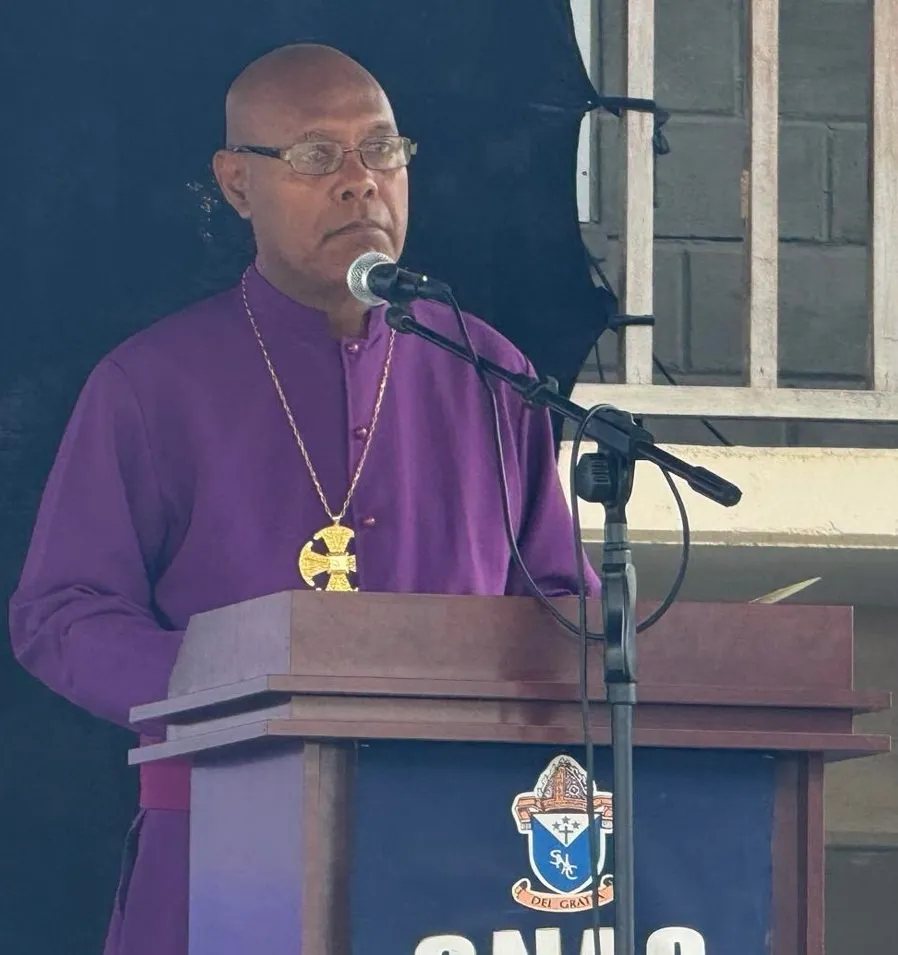
BISHOP GAMUTU CHALLENGES STUDENTS TO BUILD NATION | The Right Reverend Bishop Othniel Gamutu has challenged students of St Nicholas College to use their education not only to improve their own lives, but also to help build a better Solomon Islands and Melanesia. Bishop Gamutu made the call during the college’s 40th anniversary celebration, held under the theme, “Honouring the Past, Inspiring the Future.”
Read More Here: https://sundayisles.islesmedia.net/right-reverend-bishop.../
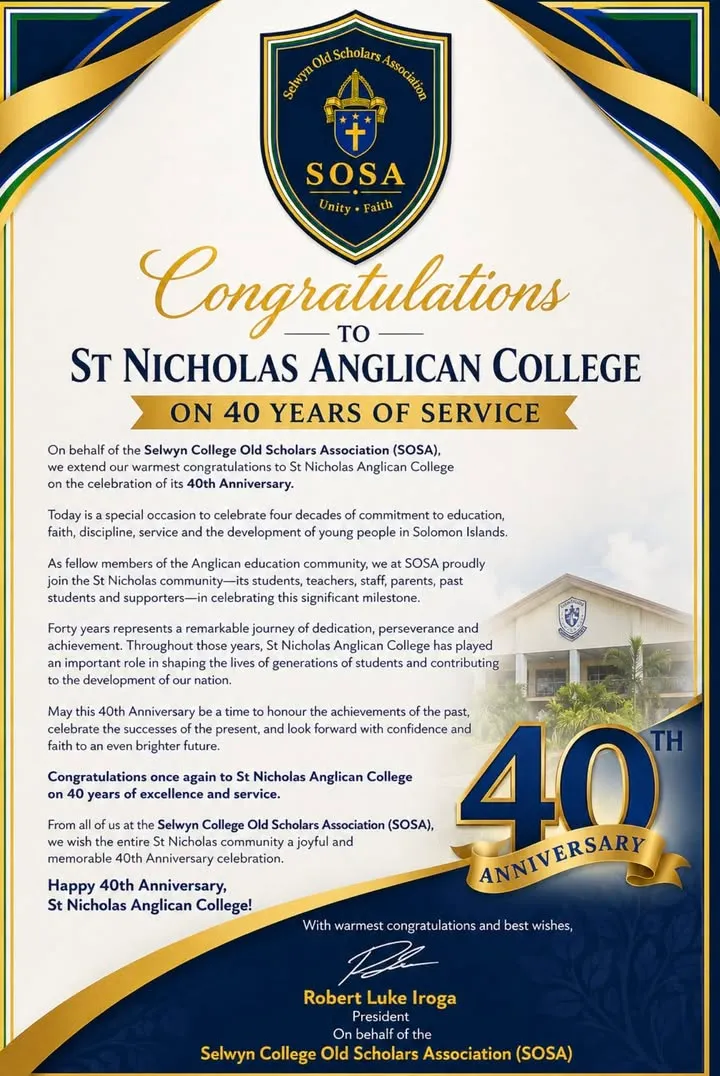
Congratulations to St Nicholas Anglican College on 40 Years of Service
On behalf of the Selwyn College Old Scholars Association (SOSA), we extend our warmest congratulations to St Nicholas Anglican College on the celebration of its 40th Anniversary.
Today is a special occasion to celebrate four decades of commitment to education, faith, discipline, service and the development of young people in Solomon Islands.
As fellow members of the Anglican education community, we at SOSA proudly join the St Nicholas community—its students, teachers, staff, parents, past students and supporters—in celebrating this significant milestone.
Forty years represents a remarkable journey of dedication, perseverance and achievement. Throughout those years, St Nicholas Anglican College has played an important role in shaping the lives of generations of students and contributing to the development of our nation.
May this 40th Anniversary be a time to honour the achievements of the past, celebrate the successes of the present, and look forward with confidence and faith to an even brighter future.
Congratulations once again to St Nicholas Anglican College on 40 years of excellence and service.
From all of us at the Selwyn College Old Scholars Association (SOSA), we wish the entire St Nicholas community a joyful and memorable 40th Anniversary celebration.
Happy 40th Anniversary, St Nicholas Anglican College!
With warmest congratulations and best wishes,
Robert Luke Iroga
President
On behalf of the Selwyn College Old Scholars Association (SOSA)
BY RODRICK DESURI
Auki
The Malaita Provincial Government and the Ministry of Education and Human Resources Development (MEHRD) have signed an Agency Agreement and Provincial Education Board Agreement.
The two agreements were signed this morning at the Malaita Provincial Chamber, Green House, in Auki.
The signing marks a significant milestone to strengthen cooperation between the National Government and the Malaita Provincial Government in delivering education services across the province.
Minister of Education, Steven Kumi, and Malaita Provincial Premier Elijah Asilau’a signed the agreements on behalf of their respective governments.
Minister Kumi said the signing marks an important milestone for education in Malaita Province.
“It is a great honour to be here in Auki today as we mark an important milestone for education in Malaita Province.
“Today is more than the signing of two agreements. It represents a shared commitment between the National Government and the Malaita Provincial Government to strengthen education services and, most importantly, improve opportunities for the children and young people of Malaita.
“As a Government for Reform, Empowerment, Accountability and Transformation—the GREAT Coalition—our vision is clear: education must be accessible to every child, regardless of where they live or their circumstances.
“Education is not a privilege; it is a fundamental right and one of our most important investments in the future of our nation,” he said.
MEHRD Deputy Secretary, Coldrine Kolae, expressed appreciation to the Malaita Provincial Government for reaching the agreement.
Mr Kolae said the agreements are not a new concept and represents an endorsement and implementation of provisions under the Education Act.
Meanwhile, Malaita Provincial Minister for Education Leonard Tuasulia acknowledged Minister Kumi and the Ministry of Education for recognising the importance of Malaita Province and supporting its education sector.
He said the agreements will strengthen cooperation between the provincial and national education authorities and help improve education services for students, teachers and schools throughout Malaita Province.
For feedback, contact: rodrickdesuri50@gmail.com
Editor: irwin3angiki@gmail.com
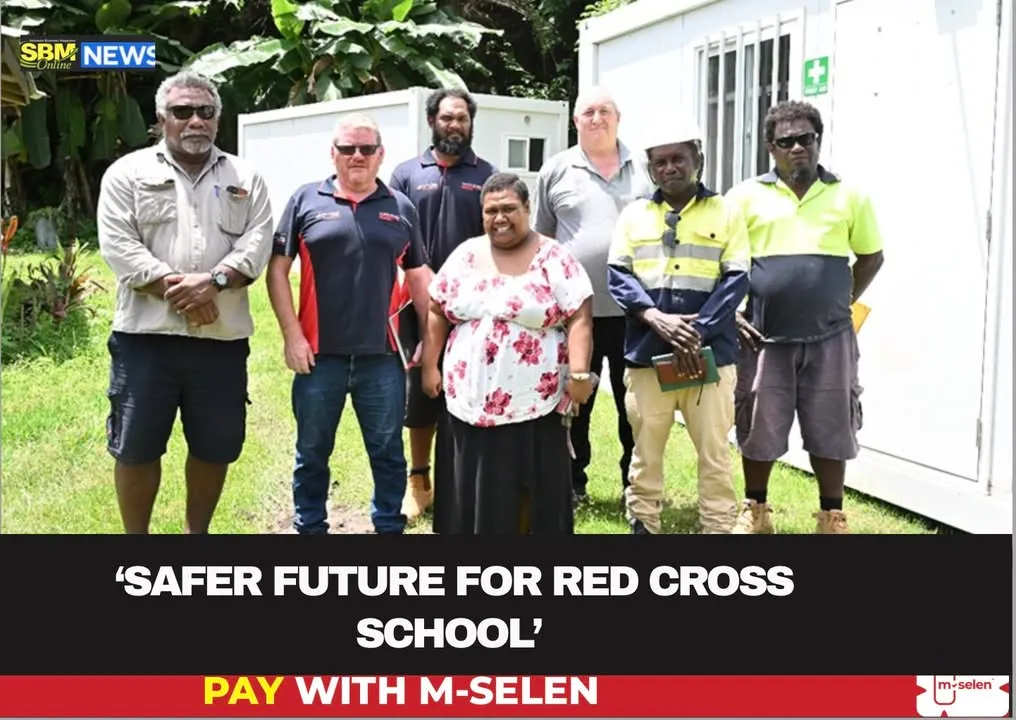
FREED FROM FLOODING: AUSTRALIA AND SOLOMON ISLANDS DELIVER SAFER FUTURE FOR RED CROSS SCHOOL
Australia is supporting infrastructure upgrades to the Red Cross Special Development Centre to reduce flooding, following an urgent call by the Solomon Islands Government.
The school was frequently forced to close due to flooding after heavy rain, with teachers working to clean mud from classrooms before students could return.
Gutters and drainage have now been upgraded to prevent this issue from occurring.
A new toilet block and kitchen have also been installed, along with roofing and gutter repairs. A new rainwater harvesting system, supported by backup water tanks, has been established, and plumbing upgrades completed to ensure a reliable and consistent water supply.
The project builds on Australia's emergency support earlier this year to urgently upgrade water, sanitation, and accessibility facilities at the Solomon Islands' only school for children with special needs.
Australian High Commissioner Jeff Roach said it was encouraging to see the immediate impact for the dedicated teaching staff and around 100 students with physical and intellectual disabilities.
"Every child deserves the opportunity to learn in a safe, healthy, and dignified environment," Mr Roach said.
"The Red Cross Centre has long been a beacon of hope for children with special learning needs in Solomon Islands and their families. Australia is proud to have responded to community concerns and Minister Fuo’o’s call to urgently address flooding at the school, helping ensure these children can learn, grow, and thrive."
Because the school supports students who are blind, deaf and living with other disabilities, extra care and attention to site safety during construction has been required.
Australia’s Solomon Islands Infrastructure Program has worked closely with local contractor Capitol Construction to ensure works have not disrupted learning and student safety.
Acting Principal Manmino Sare welcomed the progress, saying the upgrades would have a lasting impact on the school community.
"These improvements are already making a real difference in the daily lives of our students and teachers," Ms Sare said.
"The new facilities and improved drainage have made our school a safer, healthier, and more comfortable place to learn. We are excited about the positive impact these upgrades will have on our students, their families, and the wider school community."
Building on the success of these initial improvements, work will soon begin on the next phase of upgrades.
Phase 2 of the project will install a new, locally built classroom, and further upgrade the kitchen area so that it can also be used as a learning environment.
The refurbishment is being delivered through the Solomon Islands - Australia Partnership and reflects a shared commitment to ensuring children with disabilities have access to safe, inclusive and quality learning environments.
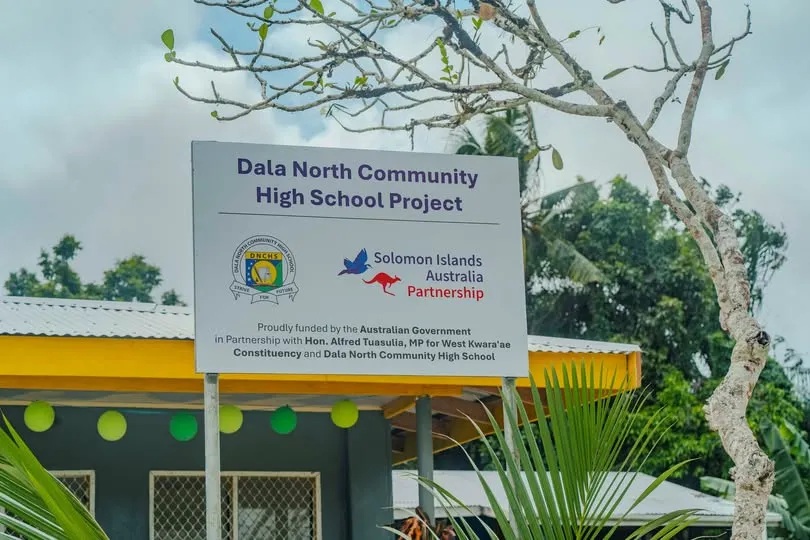
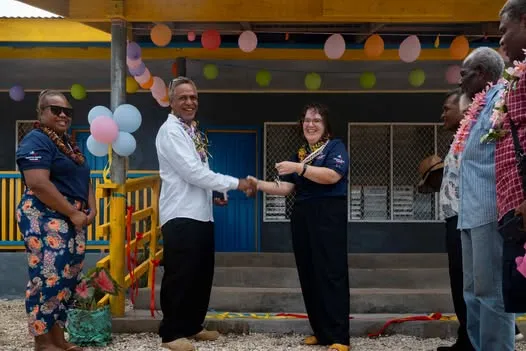
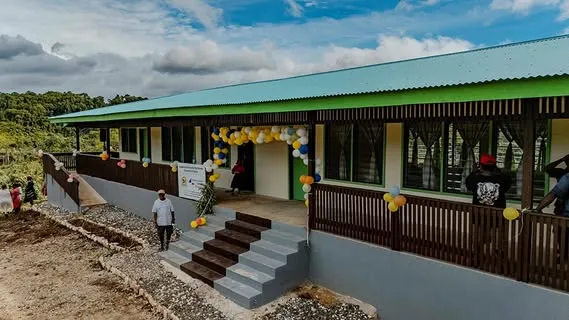
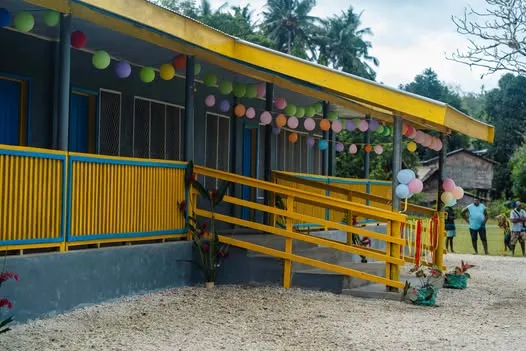
SI – AUSTRALIA COMMUNITY PARTNERSHIPS DELIVERS TWO NEW CLASSROOM BUILDINGS TO WEST KWARA’AE
High school students in the Dala North and Laugwata communities of West Kwara’ae now have access to safer, more spacious, and conducive learning environments thanks to two new classroom projects funded under the Solomon Islands–Australia Community Partnerships program.
The Dala North Community High School Classroom Project delivered three new classrooms, helping the school better accommodate its 400 enrolled students.
In Laugwata, the brand-new classroom block which contains three classrooms and an office, will benefit six highland communities with a combined population of over 3,000 residents.
Before this project, students attended classes in deteriorating primary school buildings or travelled long distances at significant cost to access secondary education.
Australia has supported 342 small scale infrastructure projects n every constituency in Solomon Islands since 2019, with the projects making a tangible difference in the lives of thousands of Solomon Islanders.
Australian High Commissioner Jeff Roach said “Australia is proud to support communities all across the country with life-changing small-scale community infrastructure projects, in partnership with the leaders and government of Solomon Islands.”
The High Commissioner thanked Honourable Alfred Tuasulia, Member of Parliament for West Kwara’ae constituency, for his contribution to and support of the projects.
"MPs know their communities best, so when a project attracts the support and contribution of an MP, we're confident that project reflects the priorities of the local community themselves.
When communities and local leaders lead the planning and implementation, they create outcomes that are transparent, sustainable, and make a real difference for years to come.”
The High Commissioner also noted the new classroom infrastructure would contribute to the Solomon Islands Government's objective of increasing access to education.
“Education is an important part of the Solomon Islands-Australia partnership, and Australia is proud to work closely with the GREAT Coalition Government to support its education agenda, which is a key national priority.”
The Australian High Commission is accepting Community Partnerships applications until 24 August 2026.
- AHC
ENDS///....
SI – AUSTRALIA COMMUNITY PARTNERSHIPS DELIVERS TWO NEW CLASSROOM BUILDINGS TO WEST KWARA’AE
西夸拉艾的达拉北和劳古瓦塔社区的高中生们,现在可以享受到更安全、更宽敞和更适宜学习的环境,这得益于在所罗门群岛-澳大利亚社区合作项目下资助的两项新教室项目。
达拉北社区高中教室项目交付了三间新教室,帮助学校更好地容纳其400名在校学生。
在劳古瓦塔,全新的教室楼包含三间教室和一个办公室,将惠及六个高地社区,合计人口超过3,000人。
在这个项目之前,学生们要么在 deteriorating 的小学建筑中上课,要么长途跋涉以高昂的费用获取中等教育。
自2019年以来,澳大利亚在所罗门群岛的每个选区支持了342个小规模基础设施项目,这些项目在数千名所罗门群岛居民的生活中产生了切实的影响。
澳大利亚高级专员杰夫·罗奇(Jeff Roach)表示:“澳大利亚自豪地支持全国各地的社区,通过小规模社区基础设施项目改变生活,与所罗门群岛的领导人和政府携手合作。”
高级专员感谢西夸拉艾选区的国会议员阿尔弗雷德·图阿苏利亚(Alfred Tuasulia)对这些项目的贡献和支持。
“国会议员最了解他们的社区,因此当一个项目获得国会议员的支持和贡献时,我们相信这个项目反映了当地社区的优先事项。当社区和地方领导人主导规划和实施时,他们创造的成果是透明的、可持续的,并且在未来多年内产生真正的影响。”
高级专员还指出,新的教室基础设施将有助于所罗门群岛政府增加教育机会的目标。
“教育是所罗门群岛-澳大利亚伙伴关系的重要组成部分,澳大利亚自豪地与伟大联盟政府密切合作,以支持其教育议程,这是一个关键的国家优先事项。”
澳大利亚高级专员办公室接受社区合作申请,截止日期为2026年8月24日。
- AHC
结束///....
By RODRICK DESURI
Auki
The National Government will officially hand over a newly constructed dining hall to Aligegeo Provincial Secondary School in Malaita Province tomorrow, Friday, August 21.
Minister of Education and Human Resources Development, MP Steven Kumi, will attend the handover ceremony as the guest of honour.
The $4 million facility was constructed between 2022 and 2025, replacing the school’s previous dining hall, which was destroyed by fire in 2019.
The new dining hall is expected to provide a more comfortable and suitable space for students to have their meals, following years of using the school chapel for both dining and assembly purposes.
The Government stepped in to fund the construction project after the devastating fire left the school without a proper dining facility.
According to a Government report, the project reflects its continued commitment to developing and improving education infrastructure to accommodate increasing enrolment in primary and secondary schools across the country.
The Aligegeo School Taskforce has expressed its appreciation to the National Government for providing the new facility.
“This project represents a significant infrastructure development for Aligegeo Provincial Secondary School and will greatly support the welfare and learning environment of its students,” the taskforce said.
The handover is expected to mark an important milestone for the school, providing students and staff with a dedicated facility for dining and other school activities.
Photo Caption; The new Aligegeo PSS Dining Hall. Photo; Solomon Lofana.
For feedback, contact: rodrickdesuri50@gmail.com
Editor: irwin2angiki@gmail.com
BY DOUGLAS VAHIA
THE Central Makira Constituency office has expressed its gratitude to the People’s Republic of China (PRC), through its Embassy in the Solomon Islands, for a donation of farming tools and equipment to cocoa and coconut farmers in the constituency.
According to the Ministry of Rural Development (MRD) Press release stated that the assistance includes 66 wheelbarrows, 66 bush knives, 66 brush knives, 66 yam spades, and five cartons of polybags totalling 33,000 pieces, aimed at boosting agricultural production, particularly cocoa and coconut, to strengthen the local economy and improve rural livelihoods.
At a handover ceremony, Constituency Development Officer (CDO), Mr. Gravis Tahiri, commended the PRC for its continued support to the constituency and to the Solomon Islands’ broader development goals across agriculture, infrastructure, health, education and rural livelihoods.
He said the assistance is a welcome boost, not only to the constituency office but to farmers themselves, enhancing their capacity and productivity.
Loading of agriculture tools, from handover venue to wharf for constituency. Photo Credit By MRD Media Press
Mr. Tahiri said the support reflects the strong partnership and enduring friendship between the Solomon Islands and the People’s Republic of China, with tangible benefits reaching rural communities. He said the assistance would directly improve the lives of farmers by providing the tools needed for their farming activities, noting that many rural people rely heavily on agriculture, and that the donation gives them greater economic opportunity and improved livelihoods.
He added that the constituency remains committed to ensuring development assistance is channelled through a fair and transparent process, directed toward projects with lasting, meaningful impact on people’s lives.
Representing the Chinese Embassy in the Solomon Islands, Second Secretary (Attaché), Mr. Wang Jinzhao, said the PRC was pleased to provide the support. He reaffirmed that the Embassy remains committed to working closely with the Solomon Islands to support its development across all sectors, and to jointly build a China–Solomon Islands community with a shared future in the new era.
For feedback, contact: diivee56@gmail.com
Editor: irwin2angiki@gmail.com
BY NED GAGAHE
The people of Thathaje are known for their hard work, resilience and strength.
Surrounded by fertile land and the sea, the community has for decades relied on fishing, farming and other small-scale activities to sustain family life.
What began as a small settlement in Gao/Bugotu, Isabel province, Thathaje has grown into a community of more than 200 people.
But beneath that growth lies a troubling reality.
For many families in Thathaje, opportunities remain limited. Education is difficult to access, health services are far away and government assistance is often described as inadequate.
During a recent visit to the community last month, the Island Sun found a people determined to improve their lives, but struggling with many of the basic services and opportunities that communities elsewhere take for granted.
Education remains a major challenge
Community elder and women’s leader Agnes Tafo said education remains one of the biggest challenges facing women and children in Thathaje.
“Many women in this community have no formal education because there is no school here,” Tafo said.
She said only a small number of women had received formal education, while most remained in the community.
The lack of access to education has also affected the next generation.
Many children are unable to progress beyond basic schooling, while only a few go on to tertiary education.
Mrs Tafo fears that pathway is becoming increasingly difficult for young people today, particularly women.
For many families, children and young people are also an important part of household labour. Fishing, gardening and other income-generating activities often depend on their contribution.
Two young kids fishing at the seafront of the village, Photo by Ned Gagahe
This creates a difficult choice for families already struggling to meet school fees and other household expenses.
Women turn to the mining camps for markets
Small-scale fishing and farming remain the main sources of cash income for many families.
The nearby mining operations at Havihua and Suma have also created some opportunities for women to sell garden produce and other food.
Some women and mothers in Thathaje sit down for a meeting, Photo by Ned Gagahe
Mrs Tafo said women sometimes take vegetables and other produce to the mining camps to sell.
But opportunities remain limited.
“We have opportunities to sell our market produce at the mining camps,” she said. “But often the only opportunity available to us is selling market goods in the village.”
She said access to seeds and other agricultural inputs was also a challenge.
“There are no seeds to plant. We just collect what we have — pawpaw, eggplant, beans and other things.”
For a community surrounded by fertile land, Tafo believes there is greater potential for agriculture if people receive the necessary support.
Health services a burden for women
Access to health care, particularly for women and mothers, remains another major concern.
Mrs Tafo said people from Thathaje have traditionally travelled to health facilities at Vulavu or Kalenga when they need medical attention.
But transport is not always available.
“When there is no OBM and no petrol, we don’t go,” she said.
The distance and cost of transport can become particularly serious when women are pregnant or when someone is seriously ill.
At times, Mrs Tafo said, mothers have been forced to deliver their babies in the village because they cannot reach a health facility.
Thathaje women leader Agnes Tafo, Photo by Ned Gagahe
“If there is someone sick, we have to find a way to access health and medical services,” she said.
Government services remain limited
Mrs Tafo said the community has received some assistance from the provincial government.
The Provincial Member has assisted with the construction of a new school, while sanitation support has included Sato Pan toilets. Gardening tools and other equipment have also recently been provided.
Sad state of water supply in Thathaje, Photo by Ned Gagahe
But she believes more needs to be done.
“We are a small village, but nobody seems to notice us,” Tafo said.
“We need our MPs and the government to look at our community and support us.”
She said national MPs had not provided the level of assistance the community needed.
“In recent years, there has never been a single MP who visited us. No teams from the government or NGOs have ever visited us. This is sad.”
She appeals to leaders to visit the community, listen to its concerns and support its development.
An elder’s view of a changing community
Chris Vahia, one of Thathaje’s elders, belongs to a generation that helped build the community and its history.
Vahia served for eight years as Constituency Development Officer under former Gao/Bugotu MP Samuel Manetoali.
Village elder Chris Vahia, Photo by Ned Gagahe
His career has also taken him through various institutions, including the provincial government, keeping him away from the community for much of his working life.
Returning home, however, has given him a different perspective on the challenges facing Thathaje.
“There are a lot of challenges I see since I returned home,” he said.
Vahia recalled that life in the community was once much simpler.
“Life was very simple and easy.”
Family, culture and community were at the centre of everyday life, he said, providing children with a strong sense of belonging and security.
Today, he sees a community facing a different set of pressures.
“I see life in the village as a big challenge, especially establishing the new school. It is a big challenge.”
A school in need of more than classrooms
The new school has become one of the community’s most important priorities.
Vahia said establishing the school was difficult, but completing the classrooms alone would not solve all of the community’s education needs.
“Life in the village needs a lot of things. The school itself will need a small clinic, a library, maybe dormitories and staff houses. I see it that way.”
He also believes stronger cooperation within the community is needed.
“Continuing with these challenges, I see there is a lack of people working together. I don’t know whether they have differences, but the chiefs have struggled hard to unite us together.”
For Vahia, development is not simply about infrastructure. It also requires people to work together and find common ground.
Sanitation remains a concern
Sanitation is another issue confronting the community.
Vahia said rubbish and pollution are affecting the river and sea, which are important sources of food and water for villagers.
“Sanitation is very important because the village needs sanitation. People pollute the river and pollute the sea.”
The provincial government has provided some sanitation assistance, including Sato Pan toilets.
But Vahia said the facilities are still insufficient.
“Only a few people use these. Most do not have them yet. They are also shared between houses. It is not really set up.”
Housing and living standards
The standard of housing also reflects the economic challenges facing Thathaje.
A traditional leaf house in Thathaje, Photo by Ned Gagahe
Vahia said only a small number of households have permanent roofing, while most families continue to live in traditional leaf houses.
A semi-permanent building in the community, Photo by Ned Gagahe
The gradual transition to permanent housing is another sign of the economic limitations facing families.
Fishing, farming and small markets
When asked about income, Vahia identified fishing and market activities as the main sources of cash for individuals.
“It is the market that individuals can make money from in the community, also fishing.”
But he said earning an income remains difficult.
“It’s very hard, how I see it. The source of income is hard.”
Thathaje’s fertile land offers potential for greater agricultural production, but residents say they lack the resources and support needed to fully develop that potential.
Mining brings new opportunities
Thathaje’s location near major mining operations has also changed the economic landscape.
The community lies close to Thousand Ships Bay, an area of considerable historical and cultural significance.
The bay is associated with Spanish explorer Álvaro de Mendaña, who encountered the harbour during his 1568 voyage.
Today, three mining companies have established camps in the wider area — Pacific Nickel Mines Kolosori Limited (PNMKL) at Havihua, Solomon Islands Resources Company Limited (SIRCL) at Suma, and Far East Resources Company Limited on San Jorge Island.
PNMKL and SIRCL are currently operating, while the mining activities have created employment and market opportunities for some communities living nearby.
Vahia said some men from Thathaje are now working at the nearby mining camps.
The workers operate on a rotational basis.
“Every two weeks they return to see their families,” Vahia said, explaining that some workers remain away for extended periods depending on their work rotations.
Around 6 to 7 men may be away working at a time.
For families, the income provides an important source of support.
For women, the mining camps have also become potential markets for garden produce.
But residents say mining-related opportunities alone cannot address the broader development needs of the community.
Distance makes basic services difficult
Health and other government services remain a challenge because of the community’s location.
Vahia said there are two clinics in the wider area, but reaching them requires transport.
People can sometimes walk to Sepi, but bad weather makes travel difficult.
“When the weather is bad, it is hard,” he said.
Transport is therefore central to access to health care, education, markets and government services.
At the national level, Vahia said the current MP had only recently begun supporting the constituency, including assistance with boats.
But he believes national leaders need to spend more time at the grassroots.
“They should come down to the grassroots level and hear us.”
The community also faces difficulties completing its new church building, adding another need to its long list of priorities.
A community with potential
Despite the challenges, Vahia remains convinced that Thathaje has considerable potential.
The fertile land could support more farming. The surrounding sea provides opportunities for fishing. Nearby mining operations have opened some employment and market opportunities.
But residents need the means to turn those opportunities into sustainable livelihoods.
They need better access to education, health care, transport, sanitation, agricultural support and government services.
Thathaje’s story is therefore not simply one of hardship.
It is a story of resilience.
For Thathaje, the next chapter will depend on whether government, communities and other stakeholders can help turn its natural resources, hardworking population and fertile land into lasting opportunities.
As Mrs Tafo put it: “I appeal to our leaders to assist us with our work and help uplift our community.”
For the people of Thathaje, that support cannot come soon enough.
*Reporting for this story was supported by Pacific Media Assistance Scheme (PACMAS).
For feedback, contact: nedgagahe@gmail.com
Editor: irwin3angiki@gmail.com
BY LESLEY FOINAGWA IN WEST KWAIO, MALAITA PROVINCE
At 60 years old, Emilio Buludele stands as one of those unsung Solomon Islanders whose work rarely makes headlines but whose impact is felt across villages, parishes and family homes. With roots in Langa Langa Lagoon and West Kwaio, Emilio lives at Buma Parish, where his hands have shaped the community for nearly forty years.
Emilio Buludele, a lifetime of skill and service.
He is not a man of loud achievements or public recognition. Instead, he represents the quiet strength of indigenous Solomon Islanders people who wake up each day, pick up their tools, and work with humility to support their families and communities.
A Lifetime of Skill and Service
Carpentry and tiling are Emilio’s lifelong passions. What began as a practical skill to earn an income has grown into a craft he uses to build homes, churches, clinics, schools and community facilities.
His work is detail‐oriented measuring surfaces, cutting tiles, preparing foundations, aligning patterns and finishing each job with care.
Emilio Buludele at work.
Behind every polished floor or neatly tiled wall in West Kwaio, there is a story , Emilio’s story.
A Teacher at Heart
What sets Emilio apart is not only his skill, but his belief that knowledge must be shared. He sees tiling as a pathway for young people to become productive and independent.
“In every work I do, especially tiling and building permanent houses, I share my knowledge with other people who work with me,” he said with a smile.
Emilio Buludele, a teacher at heart.
For him, teaching is a responsibility. He knows that one day his hands will grow tired, but the skills he passes on will continue through the next generation.
Working for Community, Not Just Income
Emilio’s generosity extends beyond paid work. He often volunteers his skills for church buildings, calling it a blessing rather than a job.
“Working as a charity for church buildings is a blessing for me rather than asking people to pay me.”
His humility reflects a deeper belief: that selfishness should never stop experienced workers from teaching younger ones.
A Quiet Legacy in West Kwaio
In places like West Kwaio and Langa Langa Lagoon, practical skills are the backbone of community development. Workers like Emilio build the foundations of everyday life ,homes for families, classrooms for children, clinics for the sick, and churches for worship.
Emilio Buludele a quiet legacy.
His story reminds us that success does not always come from titles or wealth. Sometimes it comes from hard work, practical knowledge, and the willingness to share what you know.
More Than Just Tiles
Every tile Emilio places is more than a piece of ceramic. He highlighted It represented decades of experience,service to his community,a commitment to teaching young people,the quiet resilience of indigenous Solomon Islanders
Emilio Buludele may be an ordinary man, but his contribution is extraordinary. His hands have shaped buildings and his heart has shaped futures.
BY JOHN HOUANIHAU
The Solomon Islands National University (SINU) will hold its 2026 Open Day this Friday, to allow prospective students and the wider public to learn more about study programmes, university services and career opportunities.
The Open Day will be held on Friday, August 21, under the theme, “Creating Your Future: Education, Skills and Innovation for a GREAT Solomon Islands” from 8:30 am onwards, with the main event at the SINU Kukum Campus field.
SINU said the event aims to inform prospective students, parents, teachers, school representatives and members of the public more about university education and training opportunities.
The university will showcase its academic programmes and qualifications and visitors will have the opportunity to meet lecturers, current students, and learn about admissions, scholarships and student support services.
Faculty exhibitions and live demonstrations will also form part of the programme, along with guided tours of the university’s Kukum, Ranadi and Panatina campuses.
SINU said the Open Day will also feature student performances, interactive activities and giveaways as part of the event.
The university encourages students who are considering further education to use the event to explore the different programmes and qualifications available and get information directly from lecturers and current students.
The event will also provide an opportunity for parents and teachers to better understand the university’s admission processes and available student support.
SINU has invited members of the public to attend the event and experience its campuses and university environment.
The university said the event is part of its efforts to provide information on education, skills and opportunities available to help young Solomon Islanders plan for their future.
For feedback, contact: jhouanihau24@gmail.com
Editor: irwin3angiki@gmail.com
BY CHARLES STENNETT
Papua New Guinea companies have invested more than SBD$1.8 billion in Solomon Islands in commercial activities indicating Solomon Islands as investable.
A statement from the Prime Minister’s Office today highlights Prime Minister Matthew Wale’s remarks at the inaugural Papua New Guinea-Solomon Islands Investment Conference which commenced in Honiara today.
Speaking at the conference, Prime Minister Matthew Wale confirmed that more than fifty Papua New Guinea companies are operating successfully in Solomon Islands in the areas of banking and finance, telecommunications, transport, logistics, hospitality, agriculture and professional services with investments valuing around SBD$1.8 billion dollars.
“The estimated value of PNG investment and commercial activity is around SBD$1.8 billion, a hard number, and hard numbers are signals. Capital goes where it expects returns. That figure tells the world that Solomon Islands is investable.” Prime Minister Wale said.
He said these investments are valuable to Solomon Islands as they generate employment, deepen competition, improve services and widen our tax base.
He said another added value to investment is the direct weekly Solomon Airlines service between Honiara and Port Moresby, commenced in July this year which cuts the cost of moving people, ideas and capital between our markets.
Prime Minister Wale said connectivity drives commerce.
“When businesspeople travel easily, projects develop faster; when students, tourists and professionals connect directly, new markets emerge. Together, our two countries form a market of over eleven million people. That is scale. Scale attracts investment, supports value chains, and justifies the processing plants, logistics networks and financial services that neither market fully sustains alone,” the Prime Minister said.
The two-day conference brings together government leaders, investors and business representatives to explore opportunities in sectors including agriculture, fisheries, tourism, infrastructure, energy and financial services, with the aim to strengthen trade and investment ties between the two countries.
For feedback, contact: charsstennett@gmail.com
Editor: irwin3angiki@gmail.com
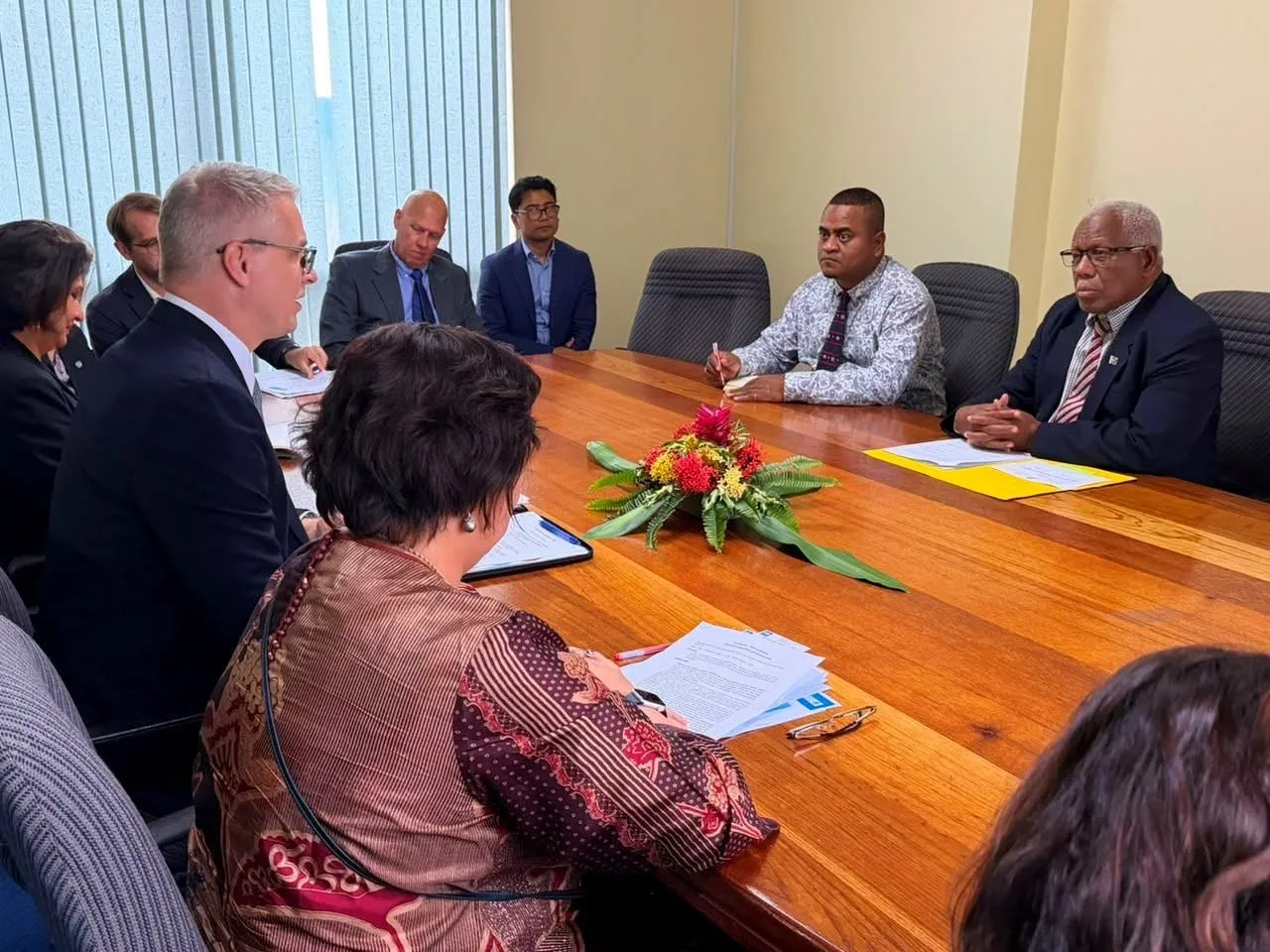
The Government of Solomon Islands has welcomed United Nations Resident Coordinator, His Excellency Mr. Dirk Wagener, and a senior United Nations delegation to Solomon Islands for their joint mission from 16 to 19 August 2026, describing the visit as an important opportunity to strengthen the longstanding partnership between Solomon Islands and the United Nations.
The Government reaffirmed its commitment to balanced, constructive and nationally driven international engagement and encouraged stronger and more strategic United Nations support for Solomon Islands’ foreign policy and development priorities.
Solomon Islands expressed its appreciation to the United Nations Resident Coordinator, participating UN agencies and the wider UN system for their continued cooperation and assistance, particularly in climate resilience, sustainable development, health, education and other key national priorities.
During discussions, Solomon Islands highlighted its regional leadership role and stressed the importance of Pacific solidarity, unity and consensus in addressing common regional challenges, including peace and security and growing geopolitical competition in the Pacific.
The Government also noted its preparations for the upcoming Pacific Islands Forum Leaders Meeting in Palau and underscored the importance of continued United Nations support for Pacific priorities, regional cooperation and collective action.
A key area of discussion was the need for an enhanced United Nations presence in Solomon Islands.
The Government reiterated its longstanding call for an elevated UN presence, including a dedicated Resident Coordinator based in Solomon Islands, to provide more timely, effective and responsive support to the country’s growing development needs.
While acknowledging the valuable contributions delivered under the previous five-year strategic framework, the Government emphasized the need for greater investment in transformative and tangible development projects under the United Nations Sustainable Development Cooperation Framework (UNSDCF) 2023–2027 and the new Country Implementation Plan.
Such investments should complement national efforts towards sustainable economic growth, inclusive development and long-term economic transformation.
The Government encouraged greater UN support for the reform agenda of the GREAT Coalition Government, particularly in economic transformation, decentralisation, accountability and improved service delivery. Assistance should remain aligned with national priorities while strengthening national systems and institutions.
Solomon Islands further emphasized the importance of ensuring that the benefits of United Nations assistance reach provinces and communities across the country. Greater support for provincial service delivery, local governance and community-level programmes would help translate development assistance into tangible improvements in people’s lives.
To strengthen coordination, Solomon Islands encouraged closer engagement with the United Nations Resident Coordinator and reaffirmed the importance of the Joint UN–Solomon Islands Government Steering Committee as a key platform for aligning UN programmes and activities with national development priorities.
The Government also called for practical follow-up to the outcomes of the High-Level Government–Development Partner Summit, including clearly defined responsibilities, regular engagement and stronger coordination among Government, United Nations agencies and development partners.
Solomon Islands acknowledged the important role of the United Nations in supporting progress towards the Sustainable Development Goals. At the same time, the Government emphasized that UN programmes and interventions should remain closely aligned with the National Development Strategy and the priorities of the GREAT Coalition Government, including sustainable economic growth, development cooperation and national economic transformation.
The Government also highlighted the importance of coordinated United Nations support for Solomon Islands’ graduation from Least Developed Country status.
Such support will be critical to ensuring a smooth and sustainable transition while minimizing potential impacts on development financing, trade opportunities and other forms of international assistance.
Looking ahead to COP31 and other key international processes, Solomon Islands encouraged the United Nations to continue supporting the country’s climate diplomacy and climate resilience priorities, including improved access to climate finance, enhanced disaster resilience and stronger linkages between ocean and climate action.
The Government thanked the United Nations Resident Coordinator’s Office for organizing the joint mission and co-hosting the High-Level Government–Development Partner Summit, which provides an important platform for strengthening coordination, partnership and alignment of development assistance with Solomon Islands’ national priorities.
---MFAET PRESS RELEASE
MFAET Minister Hon. Rick Houenipwela meets with the United Nations Resident Coordinator Mr. Dirk Wagener to Solomon Islands and his senior UN delegation.
BY JOSES SAREN
UN Resident Coordinator Dirk Wagener reaffirmed the United Nations’ commitment to Solomon Islands’ development priorities during a courtesy call on Prime Minister Matthew Wale at the Prime Minister’s Office on August 17.
Wagener pledged stronger coordination among development partners to support the country’s economic transformation, a statement from the Prime Minister’s Office said.
The UN’s footprint in the country is significant, the statement noted, with around 140 staff permanently based in Solomon Islands and 13 UN agencies delivering programmes across key development areas.
Putting a figure to that presence, Wagener revealed that the UN delivered close to SBD$323 million in programmes and assistance last year, making Solomon Islands one of the UN’s largest single-country presences in the Pacific.
That commitment, the statement went on to explain, also extends to coordination. The UN Resident Coordinator voiced readiness to help draw Solomon Islands’ development partners—both bilateral and multilateral—into closer alignment with the GREAT Coalition Government.
Better coordination, he added, will allow partners to move away from fragmented projects and towards larger, consolidated programmes that speak more directly to the Government’s priorities.
The statement also stressed that global funding pressures and ongoing UN reforms have not dimmed the Pacific’s standing. Wagener assured the Prime Minister that the region remains a priority.
He further emphasised that the UN continues to stand firmly behind Small Island Developing States and behind Solomon Islands’ own journey towards LDC graduation.
Noting that the Pacific has so far weathered the storm better than most, Wagener observed that its structural vulnerabilities and development challenges have shielded it from the deeper cuts to UN staffing and resources felt elsewhere.
That shelter is not guaranteed, however. As per the statement, he cautions that keeping international interest and resources flowing to the Pacific will take a collective effort.
For his part, Wale welcomed the assurance, calling the news encouraging for Solomon Islands, the statement said.
He also used the moment to lay out the Government’s economic policy direction, explaining that his development agenda is built around transforming and diversifying the economy away from dependence on extractive activities.
The meeting, the statement concluded, reaffirmed the strength of the partnership between the Government and the United Nations in advancing Solomon Islands’ national development priorities and ensuring international support remains aligned with the country’s long-term vision.
For feedback, contact: josessaren@gmail.com
Editor: irwin3angiki@gmail.com
Public debt increases by four times in under a decade, World Bank warns
BY JOSES SAREN
Solomon Islands’ public debt has quadrupled in less than a decade and could breach 35 percent of GDP by 2029, the World Bank says.
Debt rose by about 4 percent of GDP to reach 29.5 percent in 2025, driven by persistent fiscal deficits, major regional events, and growing infrastructure investment, according to the World Bank’s first Solomon Islands Economic Update.
The fiscal deficit widened to 3.8 percent of GDP in 2025, from 2.4 percent in 2024, the report said.
The 2025 primary deficit of 3.2 percent of GDP exceeds the debt-stabilising threshold by 2.6 percentage points, it explains.
This means public debt will keep rising, the World Bank notes, underscoring the need for gradual adjustment.
Cash reserves have fallen to less than one month of spending, down from over a month in 2022, the report adds.
The World Bank identifies the public wage bill as a major driver of fiscal pressure.
Wage spending has grown sharply to reach 16 percent of GDP, well above the medium-term target of 10 percent, the report states.
This increase reflects cost-of-living adjustments, high allowances, a growing public service, and significant teacher salary increases since the pre-pandemic period, it details.
Domestic debt increased from 1.7 percent of GDP in 2019 to 9.4 percent in 2025, driven by high-cost instruments amid limited long-term financing options, the World Bank further noted.
On the external front, the shift from grants towards concessional and semi-concessional financing has led to firmer debt service obligations, according to the report.
The World Bank recommends that the government prioritise grants and concessional financing for public investment, establish a binding ceiling on domestic borrowing, and avoid non-concessional borrowing.
It also calls for independent cost-benefit analysis on all major capital projects, including those tied to the country’s 2028 independence anniversary.
GREAT government under Prime Minister Matthew Wale is moving reforms to lower public debt.
Government through investments and closely monitored foreign financing will establish major infrastructure developments which in turn will generate revenue and lower national debt eventually.
Prime Minister Wale in his speech to close the debate on the speech from the throne in parliament earlier this month listed reforms his government will introduce which will tackle economic challenges such as public debt.
One such is his government’s engagement with the United States’ Development Finance Corporation (DFC) which will sponsor major infrastructure development in Solomon Islands.
“And the first fruit is already before us: the firm commitment, subject to details, of DFC financing for the wharf, the power, the fuel storage and the roads at Bina Harbour, non-sovereign financing that adds not one dollar to the public debt of a nation at moderate risk of debt distress,” Wale said, defending government’s stance on DFC against Opposition scrutiny in parliament.
For feedback, contact: josessaren@gmail.com
Editor: irwin3angiki@gmail.com
New school offers hope of keeping children close to their families while improving access to education
BY NED GAGAHE
In Thathaje village, Isabel province, a school building rising from a coconut plantation represents more than classrooms and lessons.
Members of Thathaje community with Mr. Nickson Teopuhi and his team pose for a group photo infront of the classroom building, Photo credit- Ned Gagahe
For parents, it means their children may no longer have to cross rough seas or leave home to stay with relatives just to attend school.
For children, it could mean going to class each morning and returning home to their families each afternoon.
And for the wider community, the nearly completed school represents hope that more children will be able to remain in education.
Thathaje, a community of about 200 people in Japuana Ward 12, Gao/Bugotu Constituency, has faced significant challenges in providing children with access to education.
For years, children have had to travel to Kalenga Primary and Secondary School or Lepi Primary School.
The journey to school can take between 5 and 10 minutes by canoe or outboard motor (OBM), depending on sea conditions.
The alternative land routes are also difficult, with steep mountains, large rocks and rugged terrain making the journey challenging for young children.
Seafront of Thathaje village, Photo credit- Ned Gagahe
For families, the problem goes beyond transportation.
When children cannot travel safely each day, some families have had to arrange for them to stay with relatives in Sepi, where Kalenga is located, or in Lepi primary school – another nearby village during the school term.
Parents then have to make regular trips to provide food, school supplies and pocket money.
Community elder Chris Vahia said the difficulties had contributed to a significant number of children being out of school.
Village elder Chris Vahia speaking to Island Sun during an interview, Photo credit- Ned Gagahe
He said about 30 children from Thathaje were currently not attending school, while some who had previously enrolled had dropped out because of the challenges.
The situation has also affected children emotionally and academically.
Grade Six student Ileen Mizar, who attends Kalenga Primary School, said staying away from her parents was difficult.
“Sometimes I feel hungry, but I keep quiet. This affects my studies. Going home and returning every weekend is difficult. I wish the school was here,” she said.
Her experience reflects the concerns of parents who want their children to receive an education without having to sacrifice their comfort, safety and connection with their families.
Kalenga Primary School headteacher Nickson Teopuhi said children could experience difficulties when staying with extended family.
Kalenga Primary School head teacher Mr Nickson Teopuhi speaking to the community, Photo credit- Ned Gagahe
He said some children could become fearful even over simple activities within the household.
“Even simple things, such as going to get food from the food safe, can make you think twice about whether it is ok to do so,” he said.
Teopuhi said this was one of the reasons establishing a school in Thathaje was important.
“That is why our children did not go to Kalenga. They were afraid because of the challenges and fear we faced,” he said.
He said the community needed to work together to ensure the school became a reality.
“We must support it as much as we can so that our children can attend school, learn and have the opportunity to develop,” Teopuhi said.
“The most important thing is for us to put our heads together, cooperate and support one another so that we can achieve our goals and create a better future for everyone.”
The school is being established with support from the Provincial Government and under the leadership of Japuana Ward 12 representative Tony Vahia.
It is currently described as an extension of Kalenga Primary School.
When the Island Sun visited the site last month, construction of the school building was about 70 percent complete.
Once completed it can accommodate up to 6 classrooms. If both the bottom and top of the building is fully utilised.
However, further work is still required before it can officially open.
Chairman of the Thathaje Extension School project, Chief George Tafo said the project had faced challenges, including a land dispute over an initially identified site.
Chairman of Thathaje extenssion school Chief George Tafo, Photo credit- Ned Gagahe
The community eventually found another location, with Tafo agreeing to allow part of his coconut plantation to be used.
“I thought about the importance of establishing this school. After consulting my family, I decided to allow the school on my coconut plantation. Education is important for the generation of this community,” he said.
Tafo said the decision was made with the future of the community’s children in mind.
For parents, the school could also remove some of the financial pressures associated with sending children to school away from home.
Parent Marion Vahia said families sometimes struggled to find fuel or an OBM to transport their children.
Parents Mostyn Huai and his wife Marion Vahia, their two boys Mostyn Jnr, and Livingstone, are currently attending Kalenga Primary School, Photo credit- Ned Gagahe
“Sometimes we do not have the fuel or outboard motor (OBM) to transport them to school. Sometimes we also do not have a canoe to take them to school. As a result, the children have to stay at home instead of attending school,” she said.
She said parents also relied on relatives to accommodate their children.
“If they allow us, we leave our children with them so they can attend school. If they do not, then the children cannot go to school,” Vahia said.
The financial responsibility does not end once children leave home.
Parents must also provide food for children staying with relatives.
“When our children stay with our relatives, we have to take food to them every Sunday. Sometimes, we also have to take food to them during the week,” she said.
Vahia said mothers also worried about whether their children were comfortable, properly fed and safe while staying away from home.
“As a mother, this is one of my biggest worries about my children,” she said.
The prospect of having a school in the village has therefore been welcomed by parents.
“We are very, very happy that once this school opens, our children will be able to attend school while staying at home. We will be able to look after them in the village, make sure they eat well, and then send them to class,” Vahia said.
Marion’s husband, Mostyn Huai, said the school would also help families reduce transportation and food costs.
“I am very, very happy that the school will soon be established here because the children will be able to live close to us,” he said.
Huai said families currently had to spend money transporting children to Kalenga and providing food when they stayed away from home.
“We have to give them a bag of rice and other food such as noodles and tinned fish,” he said.
“When the school is established here, we will be very happy because we will be able to feed the children at home before they go to school.”
For Thathaje, the school is therefore not simply another building in the village.
It represents the possibility of keeping children close to their parents while giving them a better chance to attend school regularly.
It represents relief for parents who have struggled with transportation, accommodation and food costs.
And for children who have faced difficult journeys and separation from their families, it represents the possibility of attending school without leaving home.
The community is now looking towards completing the remaining work so the school can open and begin serving Thathaje children.
The community has also appealed to donors to support the completion of the school.
*Reporting for this story was supported by Pacific Media Assistance Scheme (PACMAS)
Photo credit: Ned Gagahe
For feedback, contact: gagahened@gmail.com
Editor: irwin3angiki@gmail.com
The Solomon Islands Government and its development partners came together in Honiara for the Development and Partnerships Summit 2026, focused on turning national priorities into concrete action that leads to measurable improvements in the lives of Solomon Islanders.
Opening the Summit, the Solomon Islands Prime Minister Honourable Matthew Wale outlined the GREAT Coalition Government’s ambition for a more prosperous, resilient, inclusive and well-governed Solomon Islands, calling on development partners to match the Government’s ambition and align their support with nationally determined priorities.
The Prime Minister highlighted priorities including free education, affordable energy, stronger institutions, responsible decentralization, infrastructure, good governance and transforming the economy from exporting raw materials towards greater domestic processing and manufacturing—creating jobs and opportunities, particularly for young people.
“To you our development partners, I say plainly, Solomon Islands wants to be a reliable partner, a dependable one.”
The United Nations Resident Coordinator to Fiji, Solomon Islands, Tonga, Tuvalu and Vanuatu, Dirk Wagener, called for development to be measured not simply by the number of projects delivered, but by the difference they make in people’s lives.
“Development cannot ultimately be measured by the number of projects we launch, workshops we organise, or agreements we sign. It must be measured by whether a young person can find a decent job; whether a woman can build a business and participate equally in economic life; whether children receive a quality education; whether communities in the provinces can access essential services; and whether families can look to the future with greater security and opportunity.”
The Summit brings together Government, development partners, the UN, civil society and the private sector to identify opportunities for better-coordinated development financing and practical actions to accelerate implementation.
The United Nations and the New Zealand Ministry of Foreign Affairs and Trade supported the Summit, with UNDP Pacific Office in Fiji supporting its convening.
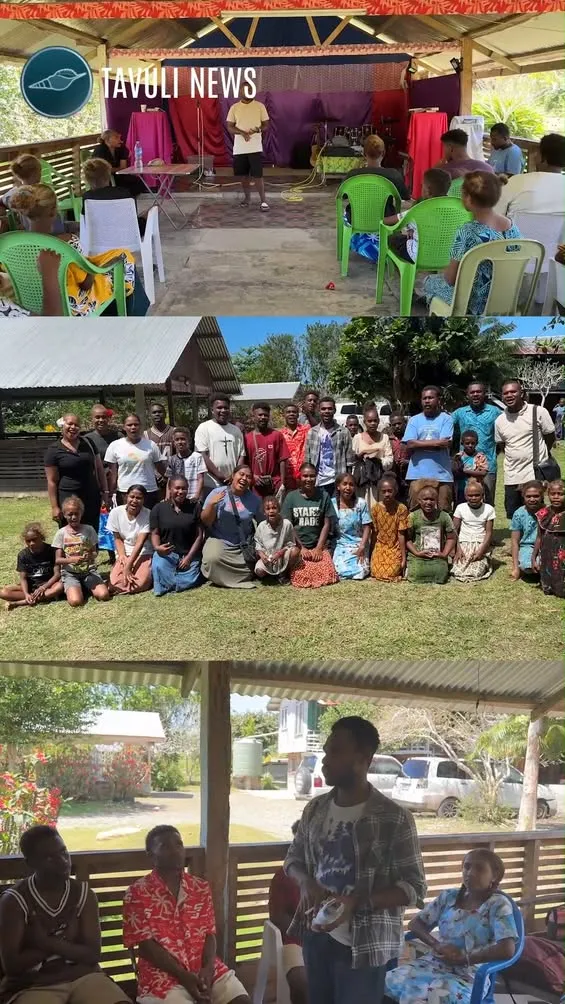
UN reaffirms support for Solomon Islands’ development priorities, economic transformation and LDC graduation journey Honiara, 17 August 2026 — Prime Minister Matthew Wale has welcomed renewed assurances from the United Nations (UN) of its continued commitment to supporting Solomon Islands’ development priorities, including the country’s economic transformation and transition from Least Developed Country (LDC) status. The [...]The post UN REAFFIRMS SUPPORT FOR SOLOMON ISLANDS DEVELOPMENT appeared first on Tavuli News (Solomon Islands) .
By Becky Bui
The Tunnel Boring Machine (TBM) for the Tina River Hydropower Development Project has officially been named Rotima, following a naming competition involving students from schools in the project area.
The name was selected during an award ceremony held in Honiara on Friday 14th of August, with the project team describing the name as a reflection of local culture, community pride and shared hopes for the future.
Project Manager Pradip Verma says the TBM will play an important role in constructing the project’s 3.2-kilometre headrace tunnel.
The tunnel, measuring 3.8 metres in diameter, will carry water from the dam to the powerhouse, where the water will be used to generate electricity.
The Tina River Hydropower Project is a 15-megawatt development consisting of three five-megawatt generating units.
Verma says the project is expected to generate about 78 gigawatt hours of electricity each year and supply around 65 percent of Honiara’s energy requirements when it is commissioned in February 2028.
“This project will definitely be a gamechanger for Solomon Islands,” Verma said.
The project is also expected to reduce Solomon Power’s reliance on diesel-generated electricity and contribute to reducing greenhouse gas emissions.
Pradip said the project is expected to displace about 38,000 tonnes of carbon dioxide equivalent greenhouse gas each year and reduce diesel consumption.
The project is also delivering benefits to communities in the project area through the Community Benefit Sharing Project.
Under the first phase, 187 homes were connected to electricity, while another 287 homes are being connected under the second phase.
The project is also supporting water supply systems, literacy and numeracy training, business training and agricultural activities.
Pradip added that around 200 local people are currently working on the project, with further opportunities expected as construction progresses.
Women in surrounding communities are also supplying food and vegetables to the project camp. With the number of people at the camp expected to increase as major construction activities progress, the supply quantity will increase.
The project has currently achieved 35 percent progress.
Verma acknowledged communities in the Bahomea, Malango, Malatoha and Belaha areas for their support, saying their cooperation has been important to the progress of the project.
Tina Hydropower Limited is expected to operate the project for 30 years after commercial operation.
With the TBM now officially named Rotima, the machine will form an important part of the next stage of tunnel construction for the Tina River Hydropower Project.
The tunnel boring is expected to commence in early November this year.
[end]
The post Tina River Hydro Project TBM named ‘Rotima’ as the project reaches 35 percent progress first appeared on Solomon Islands Broadcasting Corporation (SIBC) .
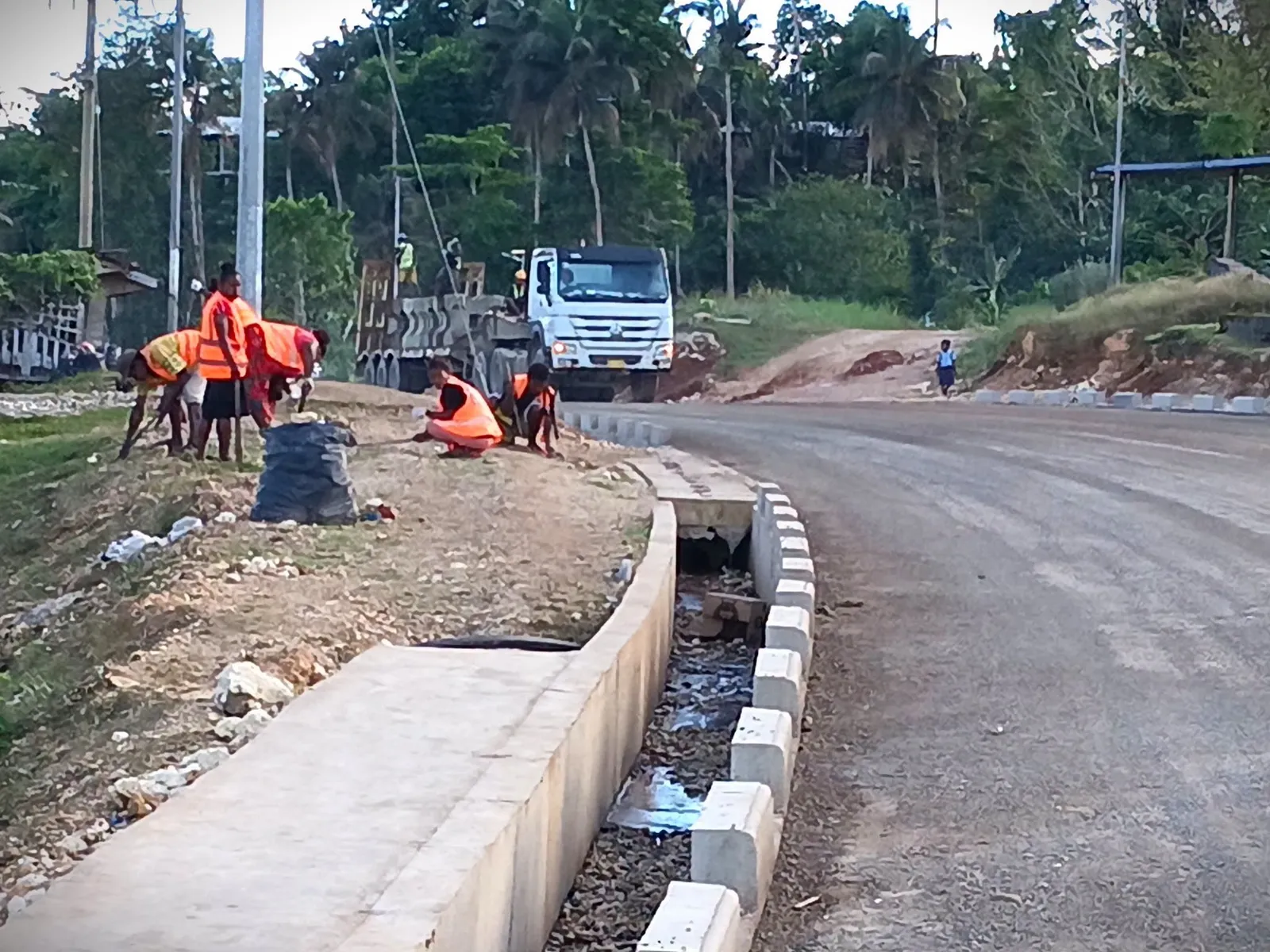
CAUSE II Improves Auki Access, Promotes CleanlinessBy SOLOMON LOFANASolomon Star, AukiMalaita Provincial capital of Auki is undergoing transformation thanks to the Community Access and Urban Services Enhancement II (CAUSE II) Project.According to the latest Auki CAUSE II project update, eight community groups around the provincial capital are currently engaged in street-cleaning activities.As a result, it helps to keep the town clean while new pedestrian infrastructure is under construction.The groups are carrying out cleaning at locations including Townend Mobile Street and the Burinasia area towards Osi Lake, helping to promote the cleanliness and facelift the township’s outlook.The update stated that CAUSE II’s community-based waste cleaning and collection activities, under Component 2 – Safe and Inclusive Communities, are aimed at supporting cleaner, safer and more inclusive urban environments while also providing short-term employment opportunities for local community members.It said the Auki Project Implementation Unit (PIU) is continuing to liaise with the Auki Town Council [ATC] regarding the disposal of collected waste and the identification of an appropriate dumping site.Meanwhile, construction of a 200-metre footpath at Bitakaula School is scheduled to begin next week.The footpath will later be complemented by solar-powered lighting, providing safer and more accessible movement for students and the wider community.Footpaths and solar-powered lighting are part of CAUSE II’s Component 2 activities, which are designed to improve community access, safety and resilience.The ongoing works are another step in CAUSE II’s efforts to support safer, cleaner and more accessible urban communities in Auki and across Solomon Islands.//End//
CAUSE II Improves Auki Access,Promotes CleanlinessBy SOLOMON LOFANASolomon Star, Auki马莱塔省首府奥基正在经历转型,这要归功于社区通行和城市服务提升 II(CAUSE II)项目。根据最新的奥基 CAUSE II 项目更新,省会周围的八个社区团体目前正在进行街道清洁活动。因此,这有助于保持城镇的清洁,同时新的行人基础设施正在建设中。这些团体正在包括 Townend Mobile Street 和通往 Osi Lake 的 Burinasia 区域等地点进行清洁,帮助促进清洁并改善城镇的外观。更新中指出,CAUSE II 的社区基础垃圾清理和收集活动,属于第二部分——安全和包容的社区,旨在支持更清洁、更安全和更具包容性的城市环境,同时为当地社区成员提供短期就业机会。它表示,奥基项目实施单位(PIU)正在继续与奥基市议会(ATC)就收集的垃圾处理和合适的倾倒地点进行联系。与此同时,Bitakaula 学校的 200 米人行道建设计划于下周开始。人行道将随后配备太阳能照明,为学生和更广泛的社区提供更安全和更便捷的出行。人行道和太阳能照明是 CAUSE II 第二部分活动的一部分,旨在改善社区通行、安全性和韧性。正在进行的工作是 CAUSE II 支持奥基及所罗门群岛更安全、更清洁和更易通行的城市社区的又一步。
BY JOHN HOUANIHAUSolomon Islands will push for stronger cooperation on natural resource management, peer learning and peacebuilding when it leads discussions as chair of the g7+.The issues were highlighted during a press conference, between the Ministry of Foreign Affairs and External Trade (MFAET) and the g7+ Secretary General, Dr. Helda da Costa, and his delegation following their official mission to Solomon Islands.Speaking at the conference on Friday 14 August at the MFAET conference room, g7+ Secretary-General Dr Hélder da Costa said responsible management of natural resources will be a key issue at the upcoming high-level g7+ summit in New York on September 24.He said the 20 g7+ member states collectively hold significant natural resources, including critical and rare minerals, making responsible management essential to ensure resource wealth benefits their people.“Combined, the whole 20 member states, when you combine, we are very rich in natural resources,” Da Costa said.He said the summit will look at mechanisms to strengthen solidarity and cooperation in managing these resources.MFAET Permanent Secretary George Hoa’au said responsible management of the extractive and mineral sectors is also a priority for the Solomon Islands Government.He said revenues generated from mineral resources should be managed carefully, including through a sovereign wealth fund, to ensure resource wealth is preserved for future generations.Hoa’au said the government’s focus is not only on using current resource revenues, but also in ensuring future generations benefit from the country’s natural wealth.He said Solomon Islands will draw on the experiences of other g7+ members, including Timor-Leste, as it considers establishing a sovereign wealth fund.“The Minister of Finance is expected to travel to Timor-Leste to learn from the country’s experience in establishing and managing such a fund,” he said.Hoa’au also identified peer learning as another key priority of Solomon Islands’ g7+ chairmanship, particularly for small states seeking practical lessons in economic development and peacebuilding.He said small countries should learn from the experiences of others rather than “reinvent the wheel”.Hoa’au said peaceful economies are essential to sustainable development, as economic growth depends on investment in people and communities.The officials also confirmed plans for Solomon Islands and Timor-Leste leaders to meet in New York, with discussions expected to explore future bilateral cooperation and the possibility of agreeing to a memorandum of understanding (MoU) between the two countries.Photo credit: John HouanihauFor feedback, contact: jhouanihau24@gmail.comEditor: irwin3angiki@gmail.com
BY JOHN HOUANIHAUThe Solomon Islands Government delegation to Timor-Leste is expected to gain practical lessons on sovereign wealth management, natural resource governance and institutional capacity as part of efforts to strengthen the country’s economic resilience.The visit follows Cabinet’s endorsement of the peer-learning mission, supported through the g7+ initiative, which promotes the sharing of practical experiences among member states.Ministry of Foreign Affairs and External Trade (MFAET), Permanent Secretary George Hoa’au, said this during a press conference on Friday last week.Mr Hoa’au said the main objective of this week’s visit is to learn how Timor-Leste established and managed its Petroleum Fund following independence in 2002.He said the mission represents an important opportunity for Solomon Islands to learn directly from Timor-Leste’s experience and consider lessons that could be adapted to the country’s own circumstances.Mr Hoa’au said the mission demonstrates the importance of peer learning in helping countries build resilience by sharing experiences and adapting approaches that have worked in similar contexts.He said lessons from Timor-Leste and other international partners will also contribute to Solomon Islands’ broader institutional reforms, including the proposed Foreign Service Bill and a policy white paper that aims to assess the country’s foreign service presence and future-proofing a foreign service that is “small but smart and sovereign.”He said Solomon Islands must be prepared to “learn, unlearn and relearn quickly” as regional and international conditions continue to change.Meanwhile, g7+ Secretary-General (SG) Dr. Hélder da Costa said he had consulted with the Ministers of Finance and Minning in Solomon Islands and their respective counterparts in Timor-Leste.He said Timor-Leste’s Minister of Finance and Minister of Petroleum and Natural Resources are prepared to host their Solomon Islands counterparts during the visit.“One of the key areas of interest will be Timor-Leste’s Petroleum Fund, which stood at about US.3 billion at the end of 2024, according to the country’s Ministry of Finance. The fund is managed under a legal and institutional framework that includes the Estimated Sustainable Income mechanism and oversight of government withdrawals.“The delegation is expected to examine not only the size of the fund, but also how it is governed, invested, protected and integrated into the national budget process, lessons that could be particularly relevant as Solomon Islands considers how best to manage future revenues from its own natural resources,” g7+ SG Dr. Hélder da Costa said.He said the visit will also strengthen cooperation in natural resource management.“The Minister of Mining and Rural Electrification is expected to sign a Memorandum of Understanding (MOU) with his Timor-Leste counterpart. The MOU will focus on three areas previously identified by the two countries: mineral resources, oil and gas, and human resource capacity-building,” he said.Photo credit: John HouanihauFor feedback, contact: jhouanihau24@gmail.comEditor: irwin3angiki@gmail.com